Ukrainian Children Face Worsening Learning Loss in Fourth Winter of War, World Vision Warns
Media Contact :
February 18, 2026
Public Relations Manager
[email protected]
m 253-298-8913

Media Contact :
February 18, 2026
Public Relations Manager
[email protected]
m 253-298-8913
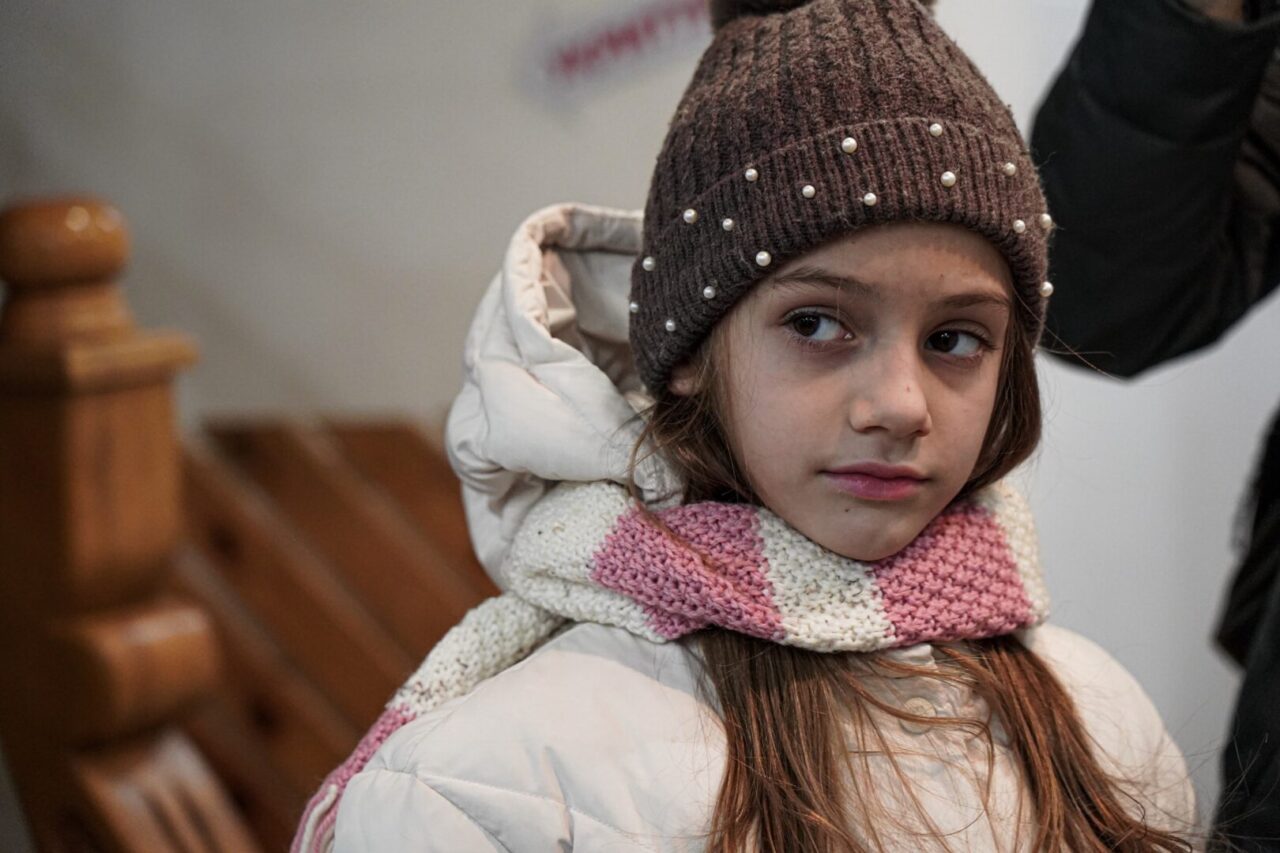
KYIV (February 18, 2026)– As Ukraine endures its fourth winter of full-scale war, new findings from a survey conducted by World Vision reveal that more than half of families are experiencing disruptions to their children’s education due to harsh winter conditions, ongoing insecurity, and widespread power outages.
The findings come from World Vision’s briefing “Surviving the Freezing Cold Under Fire,” based on a rapid survey of 25 displaced households in Kharkiv city and surrounding areas conducted in January 2026. Most households were headed by women, all included children, and families had been displaced for an average of nearly three years, underscoring the prolonged impact of war through a fourth winter.
In frontline contexts such as Kharkiv, where most children partake in remote learning, winter-related power outages can effectively eliminate access to education altogether. Repeated displacement during winter further disrupts enrollment, attendance, and relationships with teachers and peers, increasing the risk of longer-term disengagement from learning.
Access to child protection and mental health services is extremely limited. Only 28% of households reported that children are able to access services from NGOs or UN agencies, leaving 72% without child protection or mental health support at a time of heightened vulnerability.
Key findings include:
“It is cold at home, and my mother worries about me. I am often cold and have to wrap myself in a blanket. There are frequent air-raid alarms. There is no electricity, no Wi-Fi, and I have to wear warm clothes all the time,” said Mark, 8, from Kyiv.
Repeated displacement compounds the risks. 92% of surveyed households reported being displaced multiple times since the start of the war, and one in five had to move again because of harsh winter conditions.
“What these findings show us is that winter is acting as a risk multiplier for children, compounding learning loss, emotional distress, and protection concerns all at once. Winterization is therefore not a seasonal add-on. It is a life-saving intervention. If we fail to provide predictable, flexible support, we are knowingly allowing avoidable harm to children to intensify,” said Arman Grigoryan, World Vision Ukraine Response Director.
Although every household surveyed had received some form of assistance since displacement, nearly three-quarters reported that support has declined this winter compared to last year. Among those who received winterization aid, 40% said it was reduced.
The survey highlights the severe impact of winter conditions on already vulnerable families: all respondents said this winter feels colder than last year, 96% reported electricity outages, and 92% are living in freezing indoor temperatures. Many lack adequate heating supplies (76%), while 84% identified cash assistance as their most urgent unmet need, and 72% said they are receiving less support than in the previous winter.
The current Winter Response Plan has secured approximately 66% of required funding, leaving an estimated 600,000 people without planned winter support.
Nearly four years into the war, winter in Ukraine is no longer a seasonal shock. It is a predictable, recurring emergency. World Vision warns that without adequate and predictable winterization assistance, winter itself becomes a risk multiplier for children – deepening learning losses, heightening psychosocial distress, weakening protective environments, and increasing the likelihood of repeated displacement.
World Vision is calling on donors to fully fund winterization as a life-saving response. The organization urges sustained and predictable support for flexible cash assistance, protection of continuous access to education, and the integration of mental health and psychosocial support into learning spaces.
As part of its winter response, World Vision is providing cash assistance to help households cover utilities and basic needs. In frontline areas, the organization and local partners are distributing winterization kits containing mattresses, sleeping bags, high-thermal blankets, rescue foil blankets, power banks, thermos flasks, portable stoves with dry fuel, and battery-powered flashlights.
To date, World Vision has reached more than 240,000 children with educational support, 230,000 people with cash assistance, over 459,000 with food assistance, and provided non-food items to more than 335,000 people across Ukraine.
About World Vision:
World Vision is a Christian humanitarian organization dedicated to working with children, families and their communities worldwide to reach their full potential by tackling the causes of poverty and injustice. We serve all people, regardless of religion, race, ethnicity or gender. For more information, visit worldvision.org or follow on X, formerly known as Twitter, @WorldVisionUSA.