World Vision looks back at 2025’s most devastating humanitarian crises
Media Contact :
December 29, 2025
Public Relations Manager
[email protected]
m 253-298-8913

Media Contact :
December 29, 2025
Public Relations Manager
[email protected]
m 253-298-8913
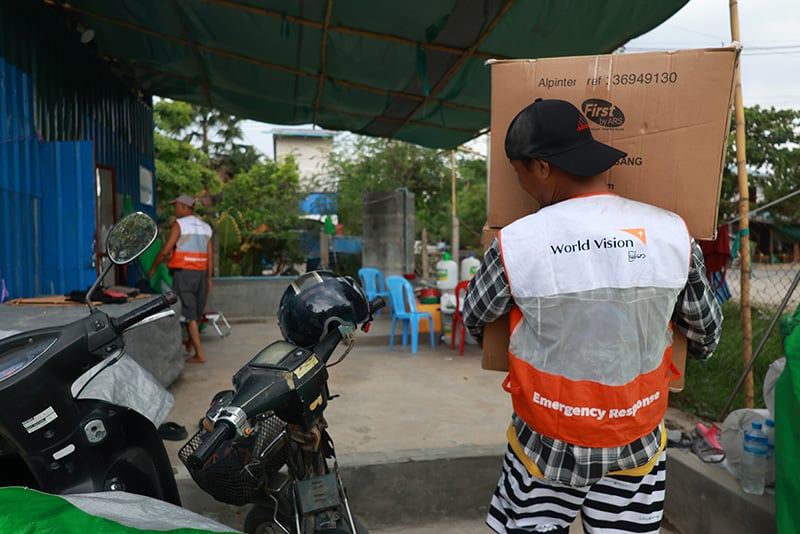
SEATTLE (December 29, 2025) — From catastrophic wildfires in California to deadly earthquakes, conflicts, and climate-driven disasters across the globe, 2025 proved to be a challenging year for humanitarian response. Despite funding cuts and sector-wide instability, global Christian humanitarian agency World Vision carried out one of its largest years of humanitarian response in 2025, responding to 117 responses across 72 countries and supporting 38.1 million people, including millions of children living in the world’s most fragile and hard-to-reach places.
World Vision also provided $276 million in cash assistance, reached 6 million children with food support, and delivered lifesaving aid in some of the world’s most dangerous and hard-to-reach locations.
“Our faith compels us to show up in the places where it’s hardest to be a child, no matter the challenges” said Edgar Sandoval Sr., president and CEO of World Vision U.S. “In 2025 alone, we responded to more than 100 emergencies across 70 countries—in every crisis, we are powered by Jesus’ love to serve children, protect families, and bring hope where it is needed most.”
Below are the top humanitarian crises World Vision responded to in 2025, listed alphabetically. Read more about the 12 most devastating disasters here, and the most dangerous places to be a child here.
California Wildfires: Catastrophic wildfires ignited across the Los Angeles region in early January 2025, including the Palisades, Eaton, and Hurst fires. Driven by drought, high Santa Ana winds, and unseasonably warm conditions, the fires scorched thousands of acres and devastated entire communities
Democratic Republic of the Congo emergencies: Children in the Democratic Republic of the Congo (DRC) are facing a dangerous combination of health and hunger emergencies, which intensified in 2025 as the country’s long standing humanitarian crises deepened.
Haiti humanitarian crisis: Haiti’s prolonged and complex crisis intensified in 2025 as new challenges have emerged alongside the existing ones. Escalating gang violence, combined with natural disasters like Hurricane Melissa, has led to widespread displacement, hunger, shutdowns of essential services, and shortages of food, water, healthcare, and education.
Hurricane Melissa: Hurricane Melissa tore through the Caribbean in late October, striking Jamaica as a Category 5 storm with devastating force. Millions of people were displaced, and food and water insecurity surged, placing children at extreme risk.
Middle East Crisis: Humanitarian needs across the Middle East surged in 2025, largely driven by conflict, large-scale displacement, economic collapse, and growing child protection concerns. Families across Lebanon and the West Bank are struggling to secure enough food, with nutritious meals increasingly out of reach. Education has been heavily disrupted, and the combined loss of food, safety, and routine places immense psychological strain on children already living through conflict.
Myanmar earthquake: On March 28, a powerful 7.7 magnitude earthquake struck central Myanmar near Mandalay — the country’s second-largest city. The shallow quake caused widespread destruction and loss of life there and in neighboring Thailand, killing more than 3,600 people and injuring 5,000 others
Sudan Conflict: No other conflict has affected more people than the one in Sudan in 2025. The escalation of violence has led to widespread atrocities, extreme hunger, and a near-total collapse of infrastructure.
Syria crisis: Syria remains one of the world’s largest displacement crises, with more than 14 million people displaced inside the country and across neighboring countries since 2011. The country is also still dealing with the long-term effects of the February 2023 earthquakes.
Texas floods: On July 4, the Texas Hill Country experienced a devastating flash flood, the sixth-deadliest freshwater flooding disaster in U.S. history. Heavy rainfall from the remnants of Tropical Storm Barry turned the Guadalupe River into a powerful torrent, sweeping through Kerr County and destroying cabins, homes, and vehicles from Camp Mystic to Ingram, Kerrville, and Center Point, then continuing downstream north and east of San Antonio.
Typhoon Kalmaegi: In November, Typhoon Kalmaegi struck the Philippines on the 4th and Vietnam on the 6th, killing more than 200 people in the Philippines and displacing over half a million. The storm caused widespread devastation in communities still recovering from earlier earthquakes. In Vietnam, Kalmaegi killed five people and displaced more than 537,000 amid compounding flooding.
War in Ukraine: After nearly four years, the conflict in Ukraine has displaced over 3.7 million people inside the country and forced more than 5 million refugees to seek safety in Europe, as of November. Humanitarian needs remain high, with an estimated 12.7 million requiring aid and protection, according to the U.N. Refugee Agency (UNHCR).
Venezuela crisis: In South America, Venezuela faces a deepening humanitarian crisis due to hyperinflation, mass unemployment, and acute shortages of vital resources such as food, medicine, and electricity. As a result, as of May, over 6.8 million people have been forced to leave the country in search of food, better living conditions, and work opportunities elsewhere since 2014.
About World Vision:
World Vision is a Christian humanitarian organization dedicated to working with children, families and their communities worldwide to reach their full potential by tackling the causes of poverty and injustice. Motivated by our faith in Jesus Christ, we serve alongside the poor and oppressed as a demonstration of God’s unconditional love for all people. World Vision serves all people, regardless of religion, race, ethnicity or gender. For more information, visit worldvision.org or follow on X @WorldVisionUSA.