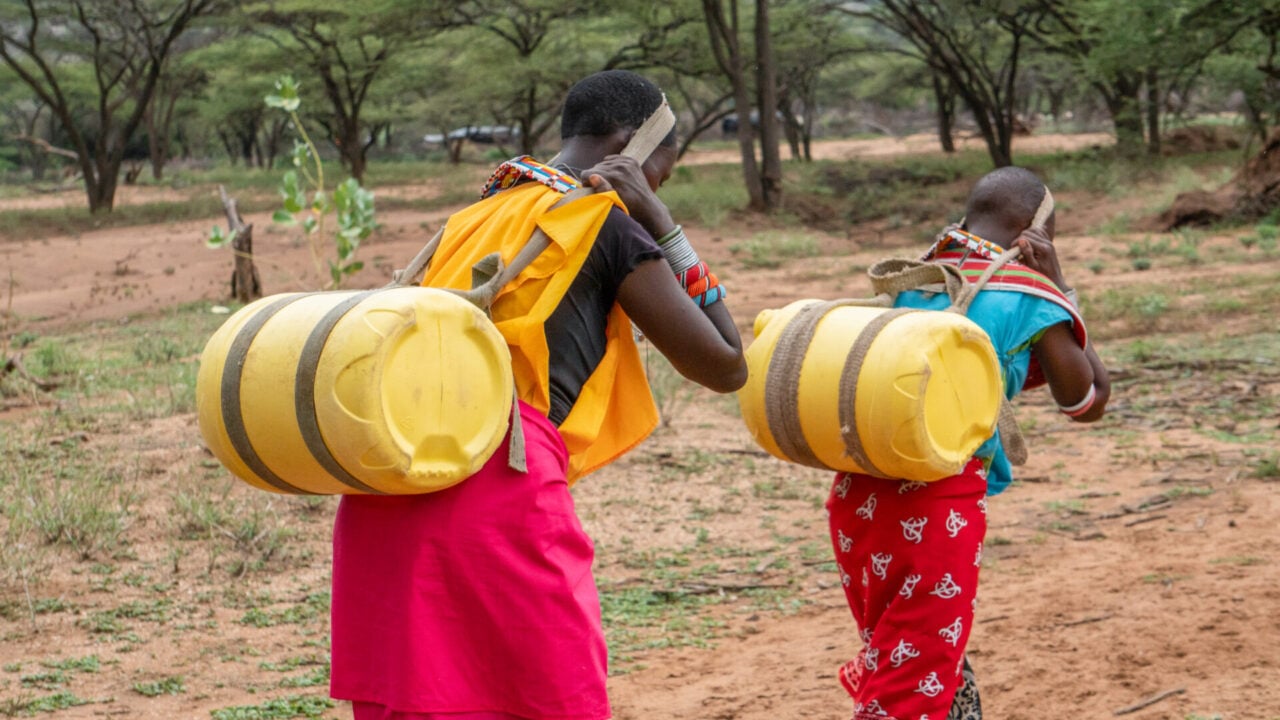
WASHINGTON, D.C. (March 3, 2026) — Ahead of International Women’s Day, global Christian humanitarian organization World Vision is publishing a new report on the efficacy of its Beyond Access program which combines behavior change, access to clean water and economic empowerment initiatives to transform women’s lives. The report measures the toll of water collection on women and girls and highlights how World Vision’s integrated program is driving measurable improvements in women’s time, income, and decision-making.
To quantify the daily time spent collecting water, World Vision partnered with researchers at Emory University’s Rollins School of Public Health, to measure water collection journeys using GPS tracking, wearable technology, and field interviews. In Guatemala, Honduras, Kenya, and Zimbabwe — the four countries where Beyond Access initially launched — women often spend hours each day collecting water. In Kenya and Zimbabwe specifically, some journeys lasted more than four hours, and women in one Honduran community made as many as 10 trips per day.
Through World Vision’s Beyond Access program, women gained reliable access to clean water, with collection times decreasing significantly from several hours in some areas to within a 30-minute round-trip.
The results were achieved through a coordinated approach with interventions focused on behavior change, clean water access and sanitation, and economic empowerment. Through intentionally sequencing these components, the program ensures that women not only gain reliable access to clean water but are also given the skills, support, and financial tools to use their time for income generation and greater participation in community decision-making.
“We see every day how extreme poverty is reinforced by systems that place an unfair burden on women and girls – from harmful social norms to the long, exhausting work of collecting water and the loss of economic opportunity,” said Margaret Schuler, World Vision’s chief impact officer. “Motivated by our Christian faith, we are committed to upholding the dignity and potential of every woman. When women are empowered with the time, resources and voice to shape their futures, families are strengthened, communities are more resilient and lasting change becomes possible.”
Women participating in the Beyond Access program described both time savings and emotional relief. With closer water points, many noted they could now work consistently, spend more time with their children, or rest during parts of the day that were previously consumed by long walks for water. Women gaining basic water access improved by an average of 29 percentage points.
Women also reported significant improvements to their financial health. By participating in savings groups, gaining access to capital, and learning business and financial literacy skills, women increased their incomes and built their savings. Women earning income from a small business or employment rose an average of 42 percentage points, and women with personal savings grew by an average of 51 percentage points.
Many women reported playing an active role in solving their communities water needs—a process most were excluded from in the past, despite bearing primary responsibility for their household water needs. Women’s participation in community water decision-making increased by an average of 31 percentage points.
The strong results from Beyond Access are shaping World Vision’s plans to expand the integrated model to additional countries. The organization plans to reach 360,000 more people in 12 countries including Senegal, Tanzania, Uganda, Viet Nam, Zambia, and Zimbabwe by 2030, ensuring more women can reclaim their time and pursue economic opportunity.
About World Vision
World Vision is a Christian humanitarian organization dedicated to working with children, families, and communities worldwide to reach their full potential by tackling the causes of poverty and injustice. World Vision serves all people, regardless of religion, race, ethnicity, or gender.