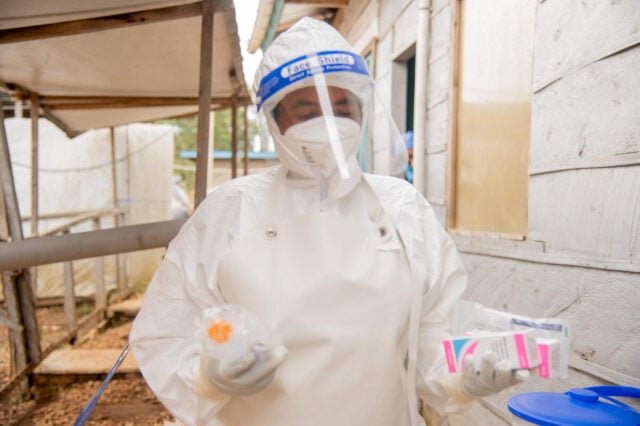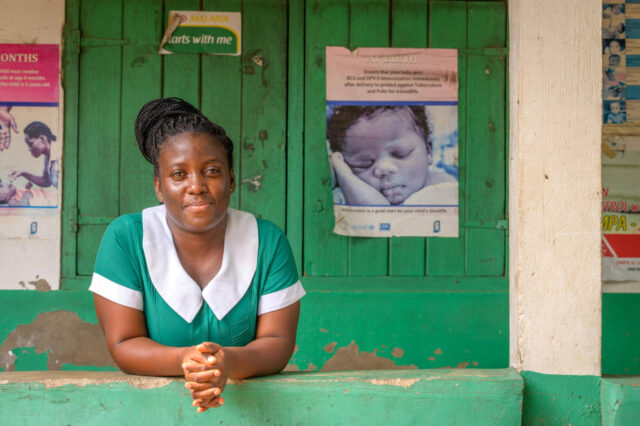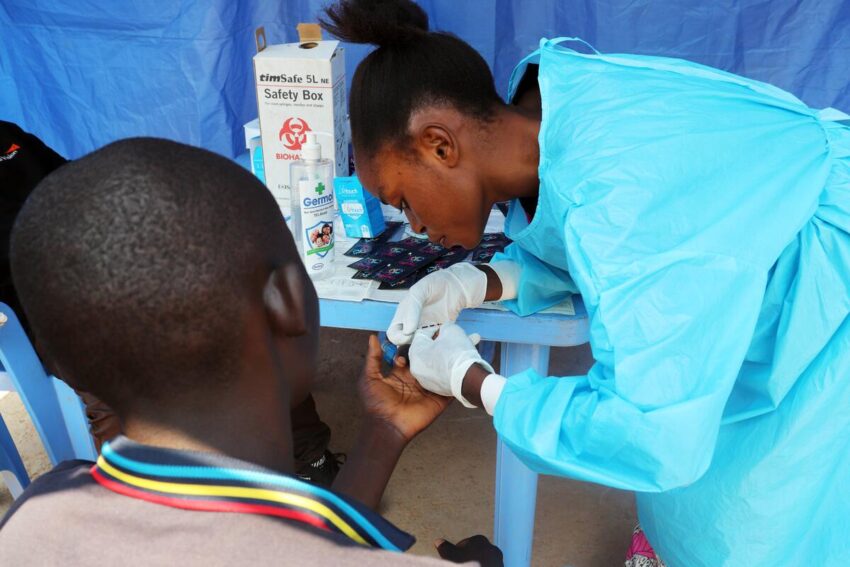
The global HIV and AIDS pandemic remains one of the most pressing health challenges, especially for children, adolescent girls and women in sub-Saharan Africa. Despite challenges, significant progress has been made:
- In 2025, approximately 41 million people worldwide were living with HIV.
- An estimated 1.2 million people acquired HIV in 2025.
- An estimated 87% of pregnant women living with HIV had access to antiretroviral medicines to help prevent transmission of HIV to their babies.
- New HIV infections among children fell by 69% from 300,000 in 2010 to 93,000 in 2025.
In honor of World AIDS Day, observed annually on December 1, people and nations unite to champion human rights, address HIV-related stigma, support those affected, and remember those who have passed.
HIV and AIDS: Facts, FAQs, and how to help
- Fast facts: HIV and AIDS
- What are HIV and AIDS, and how is HIV transmitted?
- How is HIV diagnosed, and what are the symptoms?
- How are women and girls affected by HIV?
- How are children vulnerable to HIV?
- How has World Vision responded to the HIV and AIDS pandemic?
- What is World Vision doing to help people affected by HIV and AIDS today?
- How can I help children and families affected by HIV and AIDS?
Fast facts: HIV and AIDS
- In 2025, approximately 41 million people worldwide were living with HIV.
- Since the onset of the epidemic decades ago, HIV has infected an estimated 92 million people have acquired HIV, and approximately 44.2 million people have died from AIDS-related illnesses.
- In 2025, approximately 1.2 million people acquired HIV.
- In sub-Saharan Africa, women and girls continue to be disproportionately affected, accounting for about 6 in 10 new HIV cases in 2025.
- About 570,000 people died from AIDS-related illnesses in 2025, a 73% decline from the peak in 2004 and a 57% decline from 2010.
What are HIV and AIDS, and how is HIV transmitted?
HIV, or human immunodeficiency virus, is a retrovirus that attacks and weakens the body’s immune system, making fighting off infections and certain cancers difficult. This weakening immune system, known as immunodeficiency, leaves people vulnerable to illnesses that would not usually pose a serious threat. While there is no cure for HIV, antiretroviral therapy can help people manage the virus, allowing people to live healthy lives and significantly reducing the risk of transmission.
AIDS, or acquired immunodeficiency syndrome, is the most severe stage of untreated HIV infection, where the immune system becomes severely damaged. Without treatment, HIV can progress to AIDS, which makes the body susceptible to infections and cancers.
HIV is primarily transmitted through unprotected sexual contact and from an HIV-positive mother to her baby during childbirth or breastfeeding. Although rare in most developed countries, HIV can also be transmitted through blood transfusions or organ transplants from infected donors. It can also be transmitted through contaminated needles.
How is HIV diagnosed, and what are the symptoms?
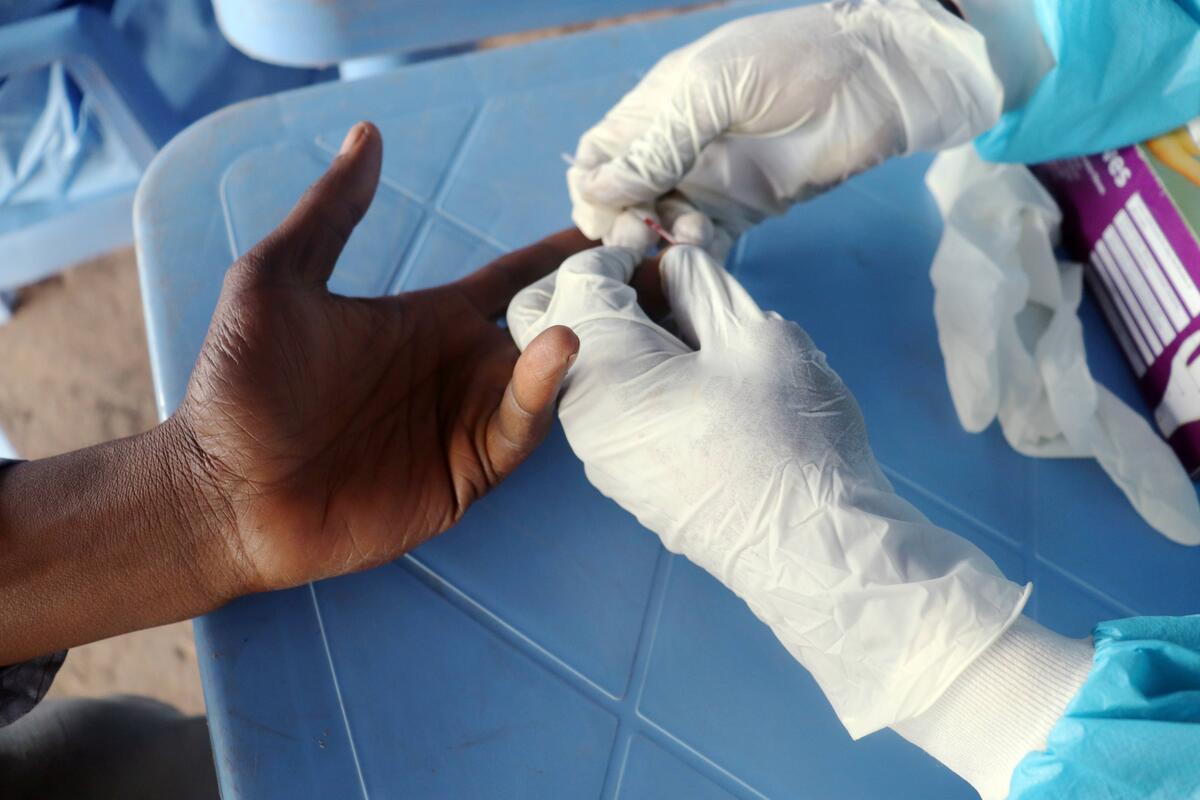
HIV diagnosis typically involves blood tests that detect the either the virus or its antibodies, according to the National Institutes of Health Office of AIDS Research.
It’s important to understand that not everyone with HIV experiences symptoms, especially during the early stages. Within about two weeks of exposure to HIV, some people develop flu-like symptoms. The symptoms include chills, fever, sore throat, night sweats, rash, fatigue, mouth ulcers, or swollen lymph nodes. However, the virus may not be detectable in tests for several weeks following exposure.
If untreated, HIV can progressively weaken the immune system, ultimately leading to AIDS. At this advanced stage, symptoms become much more severe. They may include rapid weight loss, extreme tiredness, recurring fever, swelling of the lymph glands, blotchy skin, mouth sores, and memory loss, among others.
How are women and girls affected by HIV?
Globally, women and girls accounted for about 44% of all new HIV infections in 2025. In sub-Saharan Africa, women accounted for about 6 in 10 new HIV acquisitions. Adolescent girls and young women remain particularly vulnerable: approximately 160,000 girls and young women, ages 15 to 24, acquired HIV in sub-Saharan Africa in 2025, or about 3,000 each week.
How are children vulnerable to HIV?
Most children with HIV acquire the virus from their HIV-positive mothers during pregnancy, childbirth, or breastfeeding. This underscores World Vision’s commitment to supporting pregnant women with HIV by supplying them with necessary treatments. These efforts not only contribute to mothers’ health but also help protect their babies from HIV transmission.
There has been major progress in preventing HIV among children. New HIV infections among children ages 0 to 14 fell from approximately 300,000 in 2010 to 93,000 in 2025 — a 69% decline.
But children continue to face a significant treatment gap. In 2025, approximately 1.26 million children ages 0 to 14 were living with HIV, and only 55% were receiving antiretroviral therapy. About 61,000 children under age 15 died from AIDS-related causes that year.
The effects of HIV also extend beyond children living with the virus. As of 2025, approximately 13.5 million children under age 18 had lost one or both parents to AIDS-related causes. Millions more have been affected through increased risks of poverty, homelessness, school dropout, discrimination, and loss of opportunities.
How has World Vision responded to the HIV and AIDS pandemic?
As the AIDS pandemic devastated the rural communities where we worked, World Vision responded with the HIV and AIDS Hope Initiative, inviting churches to join us in supporting thousands of orphans and vulnerable children affected by the crisis. Our initiative has a deep history:
- In August 1998, Rich Stearns, then president of World Vision, visited Uganda, witnessing the challenges of AIDS orphans and recognizing the impact of AIDS on children.
- On December 1, 2000, World AIDS Day, World Vision announced the formation of a global initiative to fight against HIV and AIDS.
- On January 12, 2002, the Hope Initiative was officially launched during a conference in South Africa, uniting World Vision staff from 17 African countries most affected by HIV and AIDS.
The Hope Initiative centered on three key components: prevention, care, and advocacy.
- Prevention: We prioritized efforts for children, high-risk groups, and pregnant and breastfeeding mothers.
- Care: We improved the quality of care for children affected by AIDS, including orphans and those living with HIV-positive parents.
- Advocacy: We advocated for public policies and programs to reduce the spread of HIV and provide care for people impacted by HIV and AIDS.
In 2003, World Vision received our first public grant for HIV programming. We launched the Channels of Hope curriculum in Africa, engaging faith leaders and congregations in advocacy and prevention efforts.
Over the years, World Vision expanded our HIV programs, involving faith leaders and communities through the Channels of Hope curriculum. We scaled up our programming in Latin America, the Caribbean, the Middle East, Eastern Europe, and the Asia Pacific regions.
In 2010, World Vision phased out the Hope Initiative, fully integrating HIV and AIDS programming into its broader program areas, making these critical efforts part of our core work around the world.
Building upon the Hope Initiative: Our unwavering commitment
With support from our partners, World Vision has made substantial progress in reducing the impact of HIV on children and families. We helped advocate for the initial proposal and creation of the President’s Emergency Plan for AIDS Relief (PEPFAR), which has saved 25 million lives. PEPFAR programs operate in over 50 countries globally. Also, PEPFAR legislation authorizes and supports The Global Fund, which has saved over 50 million lives in its fight against AIDS, tuberculosis, and malaria since its establishment in 2002.
Through World Vision’s Channels of Hope, faith leaders and community health workers play critical roles in educating communities about gender-based violence, child protection, and HIV and AIDS. We focus on helping pregnant women with HIV understand their health status and access necessary treatment to both protect their health and prevent transmission to their babies.
What is World Vision doing to help people affected by HIV and AIDS today?
In 2023, World Vision took on key roles in HIV programs under The Global Fund in several countries and regions. We reached over 1 million people through various programs. Those included HIV testing, prevention for adolescent girls and young women, tuberculosis screening and prevention, antiretroviral drug programs, life skills training for youth, improved service delivery, and support for HIV service providers.
How can I help children and families affected by HIV and AIDS?
- Pray: Join in praying that children and families affected by HIV and AIDS will have access to the healthcare and nutrition they need to ward off infections and maintain good health.
- Give: Help keep children healthy and thriving by supporting World Vision’s health programs.
Chris Huber and Sevil Omer of World Vision’s staff in the U.S. contributed to this article.