
Haiti
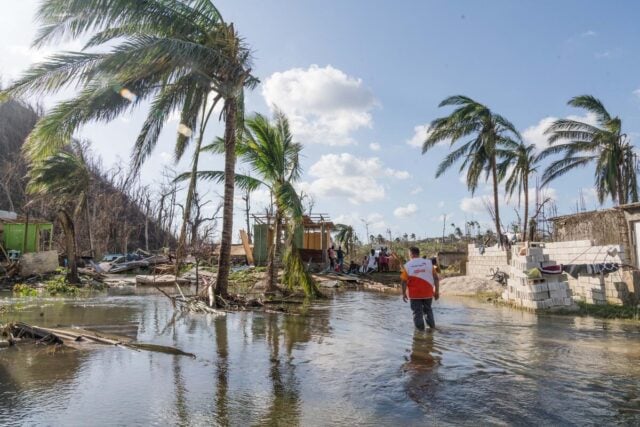
The Republic of Haiti shares the island of Hispaniola with the Dominican Republic. Hispaniola is the second largest island in the Caribbean, sitting in the middle of the hurricane belt and subject to severe storms from June to October.
Population
9,330,000
Land mass
10,714
Life Expectancy
62 years
Literacy Rate
49%
Access to Safe Water
63%
Under Age 5 Mortality Rate
165/1000
School Enrollment
50%
Average Annual Income
(GNI)
650
View US
comparison chart >

US Comparison to Haiti
Haiti United States |
|---|
Population 9,330,000 307,000,000 |
Land Mass 10,714 3,794,083 sq miles |
Life Expectancy 62 years 78 years |
Infant Mortality 165/1000 7/1000 |
Literacy Rate 49% 97% |
School Enrollment 50% 92% |
Access to Safe Water 63% 100% |
Average Annual Income $650 $41,400 |
World Vision in Haiti Today
World Vision is committed to partnering with the people of Haiti to rebuild their lives today and to help enact sustainable solutions for the future of their children, families, and communities. World Vision’s child sponsorship program plays a vital role in this partnership, with donors from the United States sponsoring more than 25,000 girls and boys. In addition to sponsorship, World Vision operates other programs that benefit communities in Haiti. Highlights include:
- Improving children's health and education by providing 57,000 children with education and primary health care.
- Empowering farmers to improve farming practices through agriculture programs.
- Working to reduce food insecurity in vulnerable households. This program provides farmers with training in sustainable agriculture and improved access to health clinics.
- Continuing earthquake relief efforts and developing a long-term strategy to help rebuild Port-au-Prince.
World Vision History in Haiti
World Vision began working in Haiti in 1959 through the sponsorship of 27 children at the Ebenezer Orphanage in Port-au-Prince, providing food, education, and the good news of Jesus Christ. Since then, some of World Vision’s major accomplishments have included:
- Providing relief supplies and starting reconstruction projects after Hurricane Flora destroyed crops in October 1963.
- Assisting over 20,000 adults and 12,590 children in the 1980s through emergency relief, child sponsorship efforts, and community development programs.
- Educating more than 800,000 Haitians in preventing and controlling the transmission of HIV and AIDS since 2003.
- Responding to severe flooding in 2004 with funding for basic necessities and clean water projects.
- Supporting seven healthcare clinics across the country since 2005, helping nearly 20,000 people.
- Distributing water, food, shelters, and other supplies to millions of Haitians displaced by the January 2010 earthquake.
- Responding to the 2010 cholera outbreak with proactive prevention education and support for local health services.
Geography & People
Geography and people
The Republic of Haiti shares the island of Hispaniola with the Dominican Republic. Hispaniola is the second largest island in the Caribbean, sitting in the middle of the hurricane belt and subject to severe storms from June to October. The original inhabitants of the area, the Taíno, named the island Ayiti, which means “land of high mountains.”
Natural resources include copper, calcium carbonate, gold, marble, and hydropower.
Most Haitians are descendents of West African slaves, with the rest of the population having a mix of European and African ancestry. French and Creole are the country’s two official languages, although the majority of Haitians speak Creole. English is often used in the business sector.
The Creole culture is a distinctive fusion of African, French, and West Indian elements. Haitians are particularly proud of their art, which has drawn international interest for its vitality and vivid colors.
In Haiti, children often marry at an early age. Because girls may marry as young as age 15, a sponsored child’s mother may be quite young.
History
Claimed for Spain by Columbus in 1492, Haiti became a Spanish and then French colony. A successful slave revolt in 1804 made Haiti the first black republic to declare independence. Haiti’s freedom from France, however, cost the nation millions of francs—a debt that sank the nation deep into poverty.
Violence and political instability marked much of the 1800s until Haiti declared bankruptcy in 1914. The United States Marines occupied the country in an effort to bring economic and democratic consistency to the country for the next 20 years. After experiencing a 30-year dictatorship and a series of troubled presidencies, Haitians elected René Préval as president in 2006.
In August and September 2008, a series of four powerful storms ripped through the country, affecting nearly 800,000 people. Then in January 2010, a 7.0 earthquake devastated the capitol city of Port-au-Prince, killing over 230,000 people and affecting an estimated 3 million people. In 2010, Haitians were also affected by a hurricane, a cholera outbreak, and disputed presidential elections.
Prayer Requests for Haiti
Please pray for:
Wisdom and guidance for the government as the country continues to rebuild.
Children who do not have access to safe homes or education.
Haiti Facts
- Haiti is the least-developed country in the Western Hemisphere and one of the poorest in the world. About 80 percent of the population lives below the poverty line.
- Despite the economy's small gains since 2005, a huge income gap still exists between the impoverished Creole-speaking majority and the more affluent French-speaking minority.
- More than 120,000 Haitians are currently living with HIV and AIDS-the highest rate in the Americas. Fear of HIV and AIDS dramatically impacted Haiti's tourist industry, contributing to the rise of unemployment to about two-thirds of the labor force.
- Nationwide food shortages in 2008 sparked riots and food costs rose over 40 percent in 2009. The World Food Program estimates that about 2.4 million Haitians cannot afford the recommended minimum daily calories.
- The 2010 earthquake leveled most of the country's capital, Port-au-Prince, killing around 220,000 Haitians and leaving millions homeless.
- Land rights issues and rubble removal have complicated earthquake relief and rebuilding efforts, but progress is being made toward transitional homes and shelters.
Child Sponsorship
Through sponsorship, World Vision is partnering with families and communities to help meet immediate needs and promote lasting changes that will strengthen communities and move families toward self-reliance.
Each year sponsors receive updates about their sponsored child and their community. Sponsors also learn about the child's continuing activities and new accomplishments so when they correspond with their child, they can encourage them in their education, hobbies and endeavors.
The commitment of World Vision sponsors helps provide children with love, hope, and opportunities for a healthy, productive future. May God bless sponsors as they make a lasting difference in the life of a special child.
Progress in
Thanks to the generous support of our sponsors, World Vision was able
to work alongside communities to accomplish the
following in 2012.

Food and Agriculture
- Distributed seeds, plantain cuttings, and livestock to families, providing food and a source of income.
- Planted fruit trees and seedlings; widespread deforestation in Haiti causes fertile topsoil to wash away, leaving farmers unable to grow enough food.

HIV and AIDS
- Supplied food and medical assistance for orphans and vulnerable children, and people living with HIV and AIDS.

Water and Sanitation
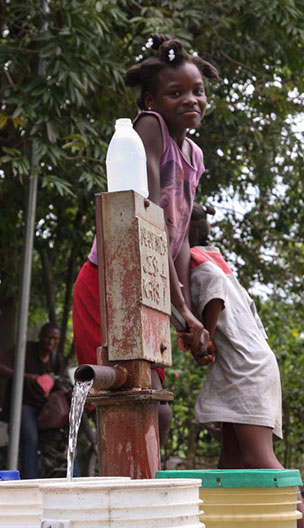
- Repaired community wells and built cisterns, improving access to clean water.

Education
- Assisted students with scholarships and provided tutoring to help them stay in school.
- Trained school directors in child psychology, helping them create a peaceful learning environment for children after the stress of the 2010 earthquake.

Emergency Response
- Distributed medical supplies to hospitals to help care for people who were displaced by the earthquake.
- Coordinated psychological support for children distressed by the earthquake.
- Helped reunite 50 families who were separated from each other in the aftermath of the earthquake.
- Distributed food, clothing, hygiene kits, and other relief items to people displaced by the January 2010 earthquake.

Economic Opportunities
- Worked with community business organizations to implement income-generating projects such as a cassava-processing factory.

Community Development
- Helped community-based aid groups become legally authorized to operate; the lengthy certification process can be an obstacle to development efforts.

Healthcare
- Supported a local health center, helping meet the increased need for medical services due to an influx of displaced people after the earthquake.
- Worked with local health agencies to provide health checkups, immunizations, and vitamin A supplements for children and pregnant women.
Haiti
United States