
South Africa
Geography and people South Africa is located on the southern tip of the African continent and surrounds the small nation of Lesotho. A variety of beautiful landscapes fill the country, from lush forests and breathtaking beaches along the Indian Ocean.
Population
50,133,000
Land mass
470,693
Life Expectancy
52 years
Literacy Rate
89%
Access to Safe Water
91%
Under Age 5 Mortality Rate
57/1000
School Enrollment
90%
Average Annual Income
(GNI)
6,100
View US
comparison chart >

US Comparison to South Africa
South Africa United States |
|---|
Population 50,133,000 307,000,000 |
Land Mass 470,693 3,794,083 sq miles |
Life Expectancy 52 years 78 years |
Infant Mortality 57/1000 7/1000 |
Literacy Rate 89% 97% |
School Enrollment 90% 92% |
Access to Safe Water 91% 100% |
Average Annual Income $6,100 $41,400 |
World Vision in South Africa Today
World Vision is committed to partnering with the people of South Africa to improve their lives today and to help enact sustainable solutions for the future of their children, families, and communities. World Vision’s child sponsorship program plays a vital role in this partnership, with donors from the United States sponsoring more than 13,200 girls and boys. In addition to sponsorship, World Vision operates other programs that benefit communities in South Africa. Highlights include:
World Vision History in South Africa
World Vision began a sponsorship program in South Africa in 1965 and opened an office in 1967. Since then, some of World Vision’s major accomplishments have included:
- Providing children who lack adequate nutrition and education with immunizations, education, clothing, and feeding programs since the 1970s.
- Improving water sources and offering agricultural training and supplies during the 1980s.
- Helping people suffering from drought and implementing disaster preparedness programs in the 1990s.
- Reducing maternal, infant, and child illnesses and deaths by improving healthcare systems and raising HIV and AIDS awareness since the beginning of the 21st century.
Geography & People
Geography and people
South Africa is located on the southern tip of the African continent and surrounds the small nation of Lesotho. A variety of beautiful landscapes fill the country, from lush forests and breathtaking beaches along the Indian Ocean to the dry, grassy savannah of the interior plateau.
Natural resources include a large variety of metals and minerals—such as gold and diamonds—and natural gas.
The majority of the population is of African descent, with a small amount of European descent and mixed race. South Africa has 11 official languages, including English, Afrikaans (a Dutch dialect), Zulu, and Xhosa.
Most people profess to be Christian, although millions still follow traditional African religions. In recent years, the Christian church has played a major role in the political struggle for equality.
History
South Africa has a long history of European rule and influence. The Dutch East India Company brought the first European settlers in 1652, and Great Britain took possession in 1806. The discovery of diamonds in 1867 and gold in 1886 brought more Europeans to the country.
Following the Boer War between the Dutch and British, the Union of South Africa was established in the early 1900s. Racial tension, however, overshadowed the country’s progress over the next few decades. The National Party started racial segregation, known as apartheid, in 1948.
The separation of races lasted until 1994 when South Africa held its first multi-racial elections. South Africa continues to hold democratic, multi-racial elections today despite lingering racial tensions.
Prayer Requests for South Africa
Please pray for:
Families living in poverty to find the resources and help they need.
The recovery of people affected by the heavy floods.
South Africa Facts
- Years of apartheid have left a mark on South Africa's struggling economy. About 24 percent of South Africans are unemployed, and at least 50 percent live below the poverty line.
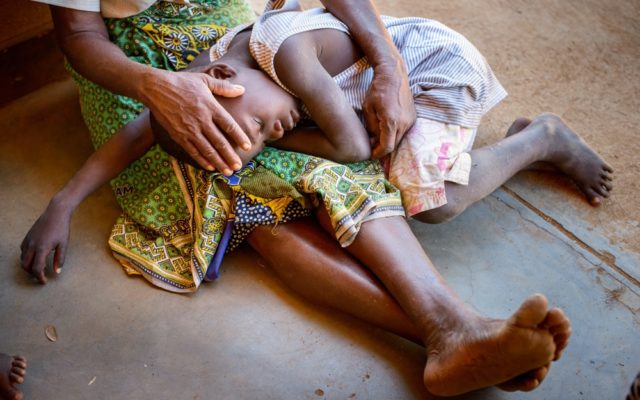
- The HIV and AIDS pandemic is threatening the health of millions of South Africans. The country has about 5.7 million HIV-positive people--the highest in the world--and one of the highest prevalence rates among adults at more than 18 percent. At least 1.4 million children have lost one or both parents to HIV and AIDS.
Child Sponsorship
Through sponsorship, World Vision is partnering with families and communities to help meet immediate needs and promote lasting changes that will strengthen communities and move families toward self-reliance.
Each year sponsors receive updates about their sponsored child and their community. Sponsors also learn about the child's continuing activities and new accomplishments so when they correspond with their child, they can encourage them in their education, hobbies and endeavors.
The commitment of World Vision sponsors helps provide children with love, hope, and opportunities for a healthy, productive future. May God bless sponsors as they make a lasting difference in the life of a special child.
Progress in
Thanks to the generous support of our sponsors, World Vision was able
to work alongside communities to accomplish the
following in 2012.

Food and Agriculture
- Supplied vegetable seeds, fertilizer, and tools for community gardens, which help provide balanced nutrition for children and families.
- Distributed chickens to families for food and income.

HIV and AIDS
- Organized and trained community care coalitions to care for orphans and vulnerable children, and people living with HIV and AIDS.
- Provided age-appropriate HIV and AIDS education for children.
- Involved local church leaders in Channels of Hope, a program that equips community groups to respond to the AIDS crisis.

Education
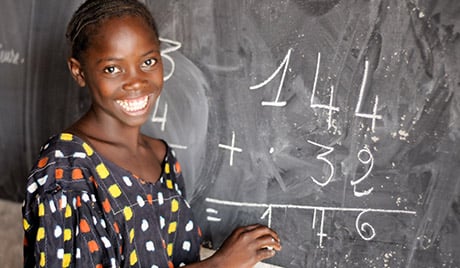
- Organized math and science events to encourage academic excellence.

Economic Opportunities
- Helped orphaned and vulnerable young people earn a living by teaching them how to make pottery and training them in computer skills.

Child Rights
- Held events to raise children's awareness of their rights and give them opportunities to express their ideas about issues that affect their lives.
- Helped children obtain birth certificates to legally establish their identity and protect their rights.

Christian Commitment
- Taught children to understand and apply God's Word through discipleship classes.

Healthcare
- Worked with the local health department to immunize children and distribute vitamin A supplements.
- Monitored children's health and helped sick children access medical treatment.
South Africa
United States