
Bolivia
Bolivia, a landlocked country in west central South America, borders Brazil, Argentina, Paraguay, Chile, and Peru. On a high plateau between two Andes Mountain ranges lies the Uyuni salt bed, the largest concentration of salt in the world.
-
Population
9,863,000 -
Land mass
424,164 -
Life Expectancy
66 years
-
Literacy Rate
91% -
Access to Safe Water
86% -
Under Age 5 Mortality Rate
51/1000
-
School Enrollment
94% -
Average Annual Income (GNI)
1,630 -
View US
comparison chart >

US Comparison to Bolivia
Bolivia United States |
|---|
Population 9,863,000 307,000,000
|
Land Mass 424,164 3,794,083 sq miles
|
Life Expectancy 66 years 78 years
|
Infant Mortality 51/1000 7/1000
|
Literacy Rate 91% 97%
|
School Enrollment 94% 92%
|
Access to Safe Water 86% 100%
|
Average Annual Income $1,630 $41,400
|
World Vision in Bolivia Today
World Vision is committed to partnering with the people of Bolivia to improve their lives today and to help enact sustainable solutions for the future of their children, families, and communities. World Vision’s child sponsorship program plays a vital role in this partnership, with donors from the United States sponsoring more than 17,400 girls and boys. In addition to sponsorship, World Vision operates other programs that benefit communities in Bolivia. Highlights include:
- Improving food production and reducing the rates of child malnutrition.
- Responding to natural disasters and emergencies with relief supplies, as well as helping communities increase their disaster preparedness.
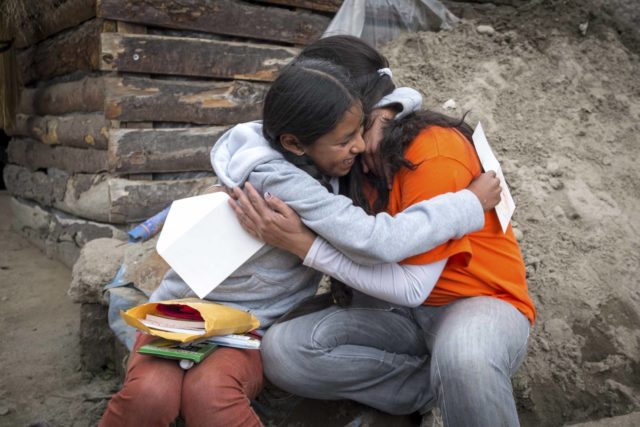
- Encouraging children to remain in school and lowering dropout rates by providing school supplies.
- Offering loans to disadvantaged Bolivians, allowing them to generate income through agriculture, raising livestock, neighborhood services, and local trade.
World Vision History in Bolivia
World Vision involvement in Bolivia began with a 1965 pastors conference. Child sponsorship began in 1975. Since then, some major accomplishments include:
- Sponsoring children and establishing orphanages and childcare centers since the 1970s.
- Supplying potatoes, vegetable seeds, and water pumps to Bolivians affected by a major drought during the 1980s.
- Providing books, tables, and chairs to school children in the 1990s.
- Training community healthcare providers, and teaching children the importance of dental and general hygiene care during the 1990s.
- Offering educational programs, family healthcare, agricultural training, and human rights advocacy since the beginning of the 21st century.
Geography & People
Geography and people
Bolivia, a landlocked country in west central South America, borders Brazil, Argentina, Paraguay, Chile, and Peru. On a high plateau between two Andes Mountain ranges lies the Uyuni salt bed, the largest concentration of salt in the world. Lowland plains, gently rolling hills, and a dense tropical rainforest are in the east.
Natural resources include gold, silver, tin, zinc, iron, oil, natural gas, timber, and hydropower.
Most of Bolivia’s residents are Native American or mestizo, of mixed Spanish and Native American descent. The majority of Caucasian Bolivians, who make up 15 percent of the population, are of Spanish descent. The official language is Spanish; Bolivians also speak the Aymara and Quechua languages.
Because roads are frequently flooded, the delivery and receipt of mail can be slow. It may take several months for residents to receive or reply to any correspondence.
History
Bolivia was once a part of the Inca Empire before the 16th century, when Spanish forces took control of the area. After several years of struggle with Spain, the territory won its independence in 1825 and named itself after Simón Bolivar, who helped in the liberation.
Bolivia has a long history of coups and civil conflicts. In 1982, the government returned to civilian democratic rule. Over the years, leaders have struggled to address social issues such as poverty and drugs.
Carlos Mesa became president in 2003 during a controversy about the exploitation of the country’s natural gas reserve. Mesa resigned less than two years later amid protests over the rising price of fuel.
Bolivian Amerindian activist Evo Morales won the presidency in December 2005 and 2009, becoming the country’s first indigenous president. His leadership continues to address social issues and to push for improvement.
Prayer Requests for Bolivia
Please pray for:
The protection and care of vulnerable children, many of whom suffer violence and abuse.
Families struggling to recover and rebuild their lives after natural disasters.
Fast Facts
- Bolivia is one of the poorest countries in Latin America. More than eight percent of Bolivians are unemployed and about 60 percent live below the poverty line.
- Income distribution among Bolivians is extremely uneven; as of 2010, the country has the seventh highest income inequality in the world.
- Indigenous groups have limited access to healthcare and many Bolivian families do not have adequate sanitation.
- Child malnutrition rates remain high throughout the country. The World Food Program estimates that about a quarter of Bolivian children under the age of five suffer from stunting.
Child Sponsorship
Through sponsorship, World Vision is partnering with families and communities to help meet immediate needs and promote lasting changes that will strengthen communities and move families toward self-reliance.
Each year sponsors receive updates about their sponsored child and their community. Sponsors also learn about the child's continuing activities and new accomplishments so when they correspond with their child, they can encourage them in their education, hobbies and endeavors.
The commitment of World Vision sponsors helps provide children with love, hope, and opportunities for a healthy, productive future. May God bless sponsors as they make a lasting difference in the life of a special child.
Progress in Bolivia
Thanks to the generous support of our sponsors, World Vision was able to work alongside communities to accomplish the following in 2010.

Food and Agriculture
- Trained farmers in proper seed handling, organic pest control, and the use of organic fertilizers to increase production and food security.
- Trained families in poultry production and helped them establish vegetable gardens.
- Helped families build greenhouses and install irrigation systems, enabling them to grow nutritious food and generate income.

Water and Sanitation
- Worked with community members to build water systems, increasing access to clean, safe water.

Education
- Held math and grammar workshops to reinforce students’ learning.
- Strengthened early childhood education by training preschool teachers in child development and establishing programs to prepare children for school.

Economic Opportunities
- Helped provide vocational training for young people graduating from school, improving their ability to obtain jobs.
- Taught entrepreneurs how to develop a business plan and assess profitability, focusing on poultry farming, dressmaking, and organic coffee production.


Bolivia
United States