Dominican Republic
The Dominican Republic shares a border with Haiti and stretches over the eastern two-thirds of the island of Hispaniola. Santo Domingo, the capital and the seventh largest city in North America, is the oldest continuously inhabited European settlement in the Western Hemisphere.
Population
9,927,000
Land mass
18,791
Life Expectancy
73 years
Literacy Rate
88%
Access to Safe Water
86%
Under Age 5 Mortality Rate
27/1000
School Enrollment
82%
Average Annual Income
(GNI)
4,860
View US
comparison chart >

US Comparison to Dominican Republic
Dominican Republic United States |
|---|
Population 9,927,000 307,000,000 |
Land Mass 18,791 3,794,083 sq miles |
Life Expectancy 73 years 78 years |
Infant Mortality 27/1000 7/1000 |
Literacy Rate 88% 97% |
School Enrollment 82% 92% |
Access to Safe Water 86% 100% |
Average Annual Income $4,860 $41,400 |
World Vision in Dominican Republic Today
World Vision is committed to partnering with the people of the Dominican Republic to improve their lives today and to help enact sustainable solutions for the future of their children, families, and communities. World Vision’s child sponsorship program plays a vital role in this partnership, with donors from the United States sponsoring more than 26,000 girls and boys. In addition to sponsorship, World Vision operates other programs that benefit communities in the Dominican Republic. Highlights include:
- Improving agriculture techniques and irrigation systems for farmers.
- Helping children and families struggling with poverty gain access to healthcare.
- Building water systems that increase access to safe water for communities.
- Responding to the Cholera outbreak in the Bateyes, in coordination with the ministry of health.
World Vision History in Dominican Republic
World Vision started projects in the Dominican Republic in 1989 to assist with extreme poverty, but began supporting the country years earlier with well drilling. Since then, some of World Vision’s major accomplishments have included:
- Providing disaster relief supplies, such as food and medicine, to people affected by hurricanes since the late 1970s and into the 21st century.
- Offering agriculture and irrigation training to farmers since the beginning of the 21st century.
- Responding to the needs of those affected by the 2010 Haiti earthquake
- Educating adolescents and youth about the prevention of AIDS and HIV, using communications mediums like radio programs to reach impacted communities.
Geography & People
Geography and people
The Dominican Republic shares a border with Haiti and stretches over the eastern two-thirds of the island of Hispaniola. Santo Domingo, the capital and the seventh largest city in North America, is the oldest continuously inhabited European settlement in the Western Hemisphere.
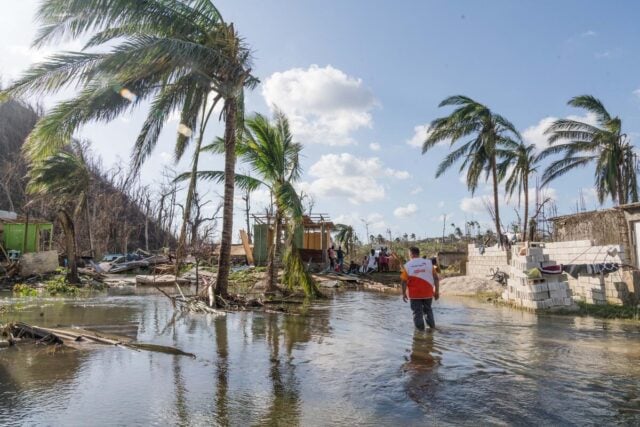
This fertile country has a semitropical climate. However, the Dominican Republic is in the middle of the hurricane belt and residents experience severe storms and flooding from June to October. Natural resources include nickel, bauxite, gold, and silver.
Most Dominicans are a mix of European and African descent. Spanish is the official language, with some people using a Creole dialect.
Dominicans are cheerful, hardworking, and community oriented, often forming strong bonds with their families and neighbors. Dominican families are generally large and may include cousins or foster children. Girls in impoverished communities often marry as teenagers.
History
After decades under French control, the Dominican Republic fell under Haiti’s rule in 1801. This period strained the relationship between the two countries. In 1844, the Dominican Republic declared independence but did not form a constitutional government until the mid-1920s.
The presidency lasted for a few years until Rafael Leonidas Trujillo established a 30-year dictatorship. When civil war started after the end of Trujillo’s rule, the United States occupied the Dominican Republic until the country regained stability.
An amendment to the constitution in 2004 allowed presidents to remain in office for more than one term. Democratic elections still continue today.
Prayer Requests for Dominican Republic
Please pray for:
People living in poverty to have access to important services like healthcare and education.
The protection and care of vulnerable children.
Dominican Republic Facts
- Many Dominicans struggle with poverty, poor living conditions, and extremely unequal income distribution.
- About 13 percent of Dominicans are unemployed and more than 40 percent live below the poverty line.
- HIV and AIDS is a growing concern for the Dominican Republic. More than 52,000 Dominicans live with this virus--more than 5,000 of these are children under the age of five.
Child Sponsorship
Through sponsorship, World Vision is partnering with families and communities to help meet immediate needs and promote lasting changes that will strengthen communities and move families toward self-reliance.
Each year sponsors receive updates about their sponsored child and their community. Sponsors also learn about the child's continuing activities and new accomplishments so when they correspond with their child, they can encourage them in their education, hobbies and endeavors.
The commitment of World Vision sponsors helps provide children with love, hope, and opportunities for a healthy, productive future. May God bless sponsors as they make a lasting difference in the life of a special child.
Progress in
Thanks to the generous support of our sponsors, World Vision was able
to work alongside communities to accomplish the
following in 2012.

Food and Agriculture
- Helped families plant vegetable gardens to provide them with nutritious food.

HIV and AIDS
- Trained schoolteachers in age-appropriate HIV-prevention and reproductive health curriculum for their students.
- Organized HIV and AIDS awareness events for community members, strengthening their knowledge of the disease and reducing stigma.
- Helped people living with HIV and AIDS access medical treatment.

Education
- Provided tutoring services to improve children's academic skills and help them succeed in school.
- Created Child-Friendly Spaces where children feel safe to express themselves.

Economic Opportunities
- Provided young people with vocational training in accounting, hairstyling, and computer technology.

Healthcare
- Contributed building materials to help families living in unsafe conditions repair their homes.
- Provided classes on breastfeeding and nutrition for mothers, working to reduce malnutrition among children.
- Monitored children's health and helped sick and malnourished children access medical treatment.

Christian Commitment
- Partner with local churches to provide biblical values and spiritual guidance to children.

Water and Sanitation
- Improve living conditions for children and their families by improving access to clean water.
Dominican Republic
United States