Sudan
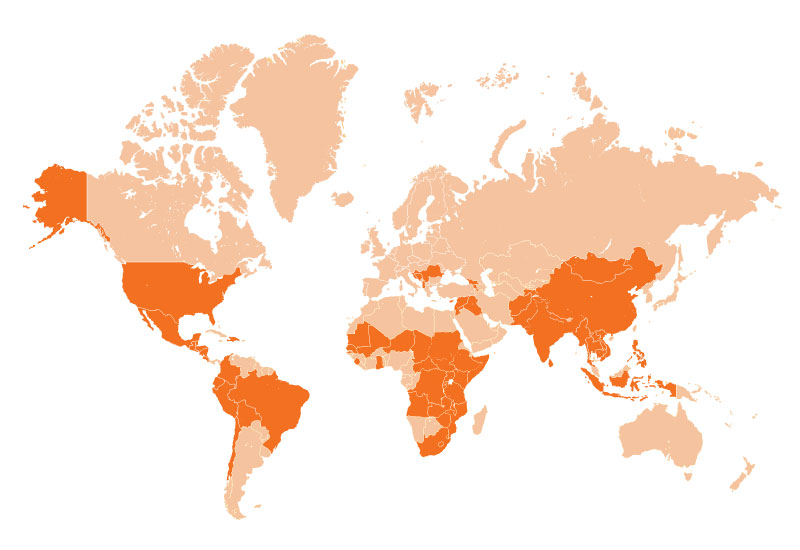
Located in eastern Africa, Sudan is one of the largest African countries in landmass — slightly more than one-quarter the size of the United States. Sudan shares its borders with seven countries and has 530 miles of coastline along the Red Sea.
Population
43,552,000
Land mass
718,723
Life Expectancy
61 years
Literacy Rate
70%
Access to Safe Water
57%
Under Age 5 Mortality Rate
103/1000
School Enrollment
68%
Average Annual Income
(GNI)
1,270
View US
comparison chart >

US Comparison to Sudan
Sudan United States |
|---|
Population 43,552,000 307,000,000 |
Land Mass 718,723 3,794,083 sq miles |
Life Expectancy 61 years 78 years |
Infant Mortality 103/1000 7/1000 |
Literacy Rate 70% 97% |
School Enrollment 68% 92% |
Access to Safe Water 57% 100% |
Average Annual Income $1,270 $41,400 |
World Vision in Sudan Today
World Vision is committed to partnering with the people of Sudan to improve their lives today and to help enact sustainable solutions for the future of their children, families, and communities. Highlights of current programs include:
- Providing safe, clean, and adequate water for war affected people and host communities across South Darfur, Blue Nile and Khartoum states.
- Providing children, pregnant women, and lactating mothers with immunizations, post natal care, and anti-natal care.
- Improving education by constructing new schools and running child friendly spaces for children and mothers to learn life skills.
- Boosting household food production by providing agricultural tools, seeds, farmer training, and other forms of support
World Vision History in Sudan
World Vision’s operations in northern Sudan date back to 1983. Since then, some major accomplishments include:
- Distributing blankets, grain, cooking oil, medical kits, and shelter to more than 50,000 people affected by civil war and drought during the 1980s.
- Helping communities through improved farming techniques and literacy education in the 1980s.
Geography & People
Geography and people
Located in northeastern Africa, Sudan is one of the largest African countries in landmass — slightly more than one-quarter the size of the United States. Sudan shares its borders with seven countries and has 530 miles of coastline along the Red Sea.
Generally flat, featureless, and plain, desert dominates much of the north.
Sudan has abundant human, natural and mineral resources, but the decades-long conflicts and resulting humanitarian crises have hampered the country's progress and diminished its potential.
Natural resources include petroleum, small reserves of iron ore, copper, chromium ore, zinc, tungsten, mica, silver, gold, and hydropower.
Poor infrastructure, continuing conflict, and massive displacement of people because of these conflicts, have undermined development and significantly affected children and their communities in various parts of the country.
Most of the population is Sunni Muslim, with a small Christian minority. An estimated 70 percent of the population is Sudanese Arab.
Arabic and English are the official languages, although people also speak a variety of African languages.
About 80 percent of Sudanese work in the agriculture sector, growing things like cotton, peanuts, sorghum, millet, and wheat.
History
Sudan gained independence from Britain in 1953 and established a democratic government in 1956. Military officers iseized control of the government in 1958.
Two civil wars lasted through most of the 20th century. The conflict was partially driven by religious and ethnic disputes between Arabs in the north and Africans in the south.
The first war lasted until 1972, with the second one starting in 1983. The second war displaced about four million Sudanese and killed at least two million over 20 years. After two years of peace talks starting in 2002, the north and south signed a peace agreement.
Another conflict started in Darfur in 2003, displacing almost 2 million people and killing between 200,000 and 400,000. UN peacekeeping troops are still trying to help end the conflict.
In January 2011, South Sudan voted to secede from Sudan, and South Sudan became an independent country on July 9, 2011. Despite some reports of violence, the international community declared the vote to have been fair and mostly peaceful.
Prayer Requests for Sudan
Please pray for the people of Sudan and for peace and stability in their country.
Sudan Facts
- After years of civil war, millions of Sudanese still struggle with food insecurity and poverty.
- More than 18 percent of Sudanese workers are unemployed and about 40 percent of the population lives below the poverty line.
- More than 40 percent of people do not have access to safe water and more than 60 percent are not using adequate sanitation facilities.
- Only about 68 percent of children are enrolled in primary school; this number drops once children enter secondary school.
- More than 320,000 people are living with HIV or AIDS.
Child Sponsorship
Through sponsorship, World Vision is partnering with families and communities to help meet immediate needs and promote lasting changes that will strengthen communities and move families toward self-reliance.
Each year sponsors receive updates about their sponsored child and their community. Sponsors also learn about the child's continuing activities and new accomplishments so when they correspond with their child, they can encourage them in their education, hobbies and endeavors.
The commitment of World Vision sponsors helps provide children with love, hope, and opportunities for a healthy, productive future. May God bless sponsors as they make a lasting difference in the life of a special child.
Sudan
United States