
Uganda
Uganda is a small, landlocked country located on the equator in East Africa. Its beautiful and diverse landscapes make Uganda known as the Pearl of Africa.
Population
33,425,000
Land mass
93,065
Life Expectancy
54 years
Literacy Rate
73%
Access to Safe Water
67%
Under Age 5 Mortality Rate
99/1000
School Enrollment
92%
Average Annual Income
(GNI)
490
View US
comparison chart >

US Comparison to Uganda
Uganda United States |
|---|
Population 33,425,000 307,000,000 |
Land Mass 93,065 3,794,083 sq miles |
Life Expectancy 54 years 78 years |
Infant Mortality 99/1000 7/1000 |
Literacy Rate 73% 97% |
School Enrollment 92% 92% |
Access to Safe Water 67% 100% |
Average Annual Income $490 $41,400 |
World Vision in Uganda Today
World Vision is committed to partnering with the people of Uganda to improve their lives today and to help enact sustainable solutions for the future of their children, families, and communities. World Vision’s child sponsorship program plays a vital role in this partnership, with donors from the United States sponsoring more than 35,600 girls and boys. In addition to sponsorship, World Vision operates other programs that benefit communities in Uganda. Highlights include:
- Expanding access to healthcare and reducing the spread of HIV and AIDS, malaria, and tuberculosis.
- Improving the quality and access to primary school education.
- Training village health teams in districts that reach 10,000 mothers and caregivers with key health and nutrition information.
World Vision History in Uganda
World Vision assistance to Uganda dates back to 1972, which included assistance to Christians who fled persecution under Dictator Idi Amin. World Vision helped Ugandans rebuild their country after Amin was deposed, and in 1985 opened an office there. Since Amin’s overthrow in 1979, some of World Vision’s major accomplishments have included:
- Training farmers, developing clean water facilities, increasing public health and hygiene awareness, and improving nutrition and food production during the 1980s.
- Providing former child soldiers with counseling and helping them reunite with their families through the 1990s and into the beginning of the 21st century.
- Offering education and vocational skills training to children who have lost one or both parents to HIV and AIDS since the 1990s.
Geography & People
Geography and people
Uganda is a small, landlocked country located on the equator in East Africa. Its beautiful and diverse landscapes make Uganda known as the Pearl of Africa.
Flat highlands run throughout most of the country and a lush river valley sits in the northeast. Uganda contains four large lakes, including Lake Victoria, which is the world’s fourth largest lake.
About 80 percent of Ugandans work in agriculture, growing crops such as cotton, corn, tea, and coffee. Natural resources include copper, cobalt, hydropower, limestone, and salt.
More than 50 ethnic groups live in Uganda. More than 1 million refugees also live in the country, most from Sudan and the Democratic Republic of the Congo. Ugandans use English, the official language, in schools, government, and media. They also speak Swahili, Luganda, and other languages.
History
Uganda gained independence from the United Kingdom in October 1962. Nine years later, a young army officer named Idi Amin seized government control. In his eight year dictatorship, Amin killed some 300,000 people before being forced into exile in 1979. Wars against the government further damaged economic and social conditions over the next seven years.
The National Resistance Army, a guerilla force, won the 1981-1986 war and made Yoweri Museveni president. Musevini has been credited for bringing economic stability after the tumultuous past.
In 2006, the Lord’s Resistance Army (LRA)—a rebel group with a 20-year history of violence in northern Uganda—reached a ceasefire with Ugandan government, allowing internally displaced people to return to their homes. However, the LRA leadership abandoned the final peace agreement and resumed hostilities, relocating their bases to eastern Democratic Republic of the Congo.
Prayer Requests for Uganda
Please pray for:
The protection and care of vulnerable children, so they can enjoy life in all its fullness.
Economic stability so families can earn enough to buy food and build better futures.
Uganda Facts
- Although the LRA and Ugandan government reached a ceasefire in 2006, its violence has left a mark on Uganda's northern districts. More than 30,000 children were abducted by the LRA to train as soldiers, and about 1.8 million people fled their homes to escape the violence.
- High unemployment rates and food insecurity face most Ugandans, especially in rural areas. About 35 percent of the population lives below the poverty line. Many communities face chronic hunger, and the World Food Program estimates that over 30 percent of children are stunted from malnutrition.
- Health concerns also threaten Ugandans. Malaria, respiratory infections, and diarrhea are primary causes of death among children. More than 940,000 people are living with HIV and AIDS and more than 1.2 million children have lost one or both parents to this disease.
Child Sponsorship
Through sponsorship, World Vision is partnering with families and communities to help meet immediate needs and promote lasting changes that will strengthen communities and move families toward self-reliance.
Each year sponsors receive updates about their sponsored child and their community. Sponsors also learn about the child's continuing activities and new accomplishments so when they correspond with their child, they can encourage them in their education, hobbies and endeavors.
The commitment of World Vision sponsors helps provide children with love, hope, and opportunities for a healthy, productive future. May God bless sponsors as they make a lasting difference in the life of a special child.
Progress in Uganda
Thanks to the generous support of our sponsors, World Vision was able
to work alongside communities to accomplish the
following in 2012.

Food and Agriculture
- Provided families with livestock, vegetable seeds, and fruit trees, improving their access to nutritious food.

HIV and AIDS
- Provided training and supplies to community care coalitions—local groups that care for people living with HIV and AIDS.
- Worked with health agencies to raise awareness of HIV and AIDS, expand testing and counseling services, and increase access to anti-retroviral drugs.

Water and Sanitation
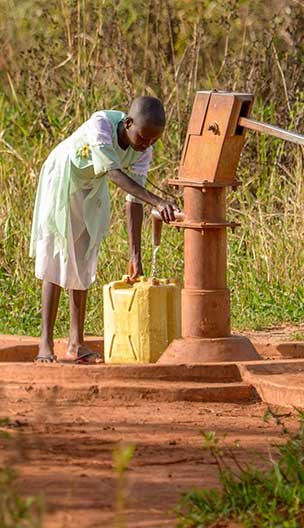
- Drilled wells and protected springs, improving access to water and reducing the prevalence of waterborne illness.
- Worked with the community to build school and household latrines, improving sanitation.

Education
- Organized campaigns to increase school enrollment and advocate for children’s right to education.
- Partnered with the community to build classrooms and teachers’ quarters, increasing school capacity and providing a safe learning environment.
- Strengthened the education system by training teachers in child psychology, child rights, and special-needs education.

Child Rights
- Organized clubs to teach children about their rights and give them opportunities to express their ideas about issues that affect their lives.

Christian Commitment
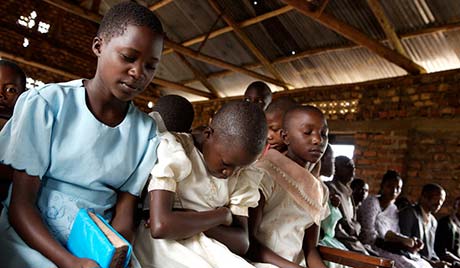
- Trained Sunday school teachers and supplied them with children's Bibles and books.

Healthcare
- Monitored children's health and helped sick children access medical treatment.
- Distributed treated bed nets to help protect children from malaria.
Uganda
United States