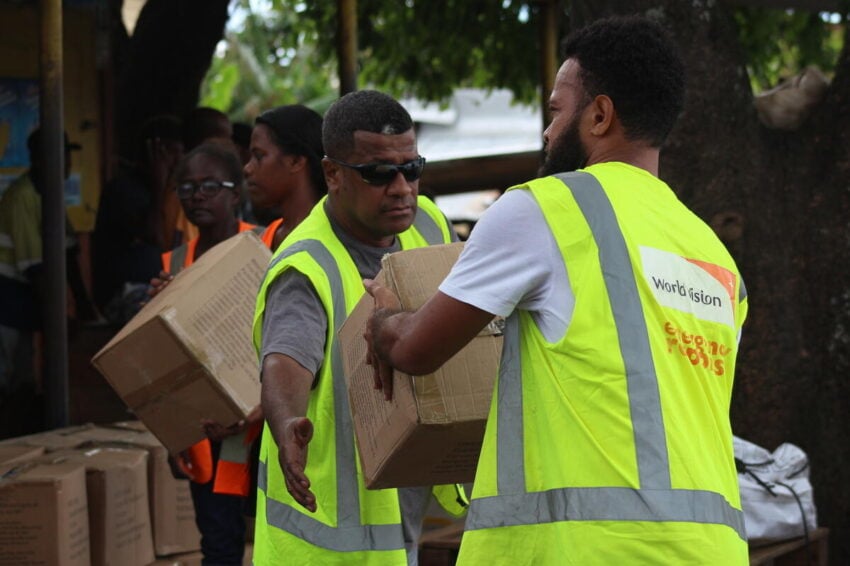
The Solomon Islands, a nation of nearly 1,000 islands east of Papua New Guinea, sits on the Pacific Ring of Fire, where 90% of the world’s earthquakes occur. The islands are also prone to extreme weather and flooding. During the past decade, Solomon Islands disasters included cyclones, high tides, floods, earthquakes, volcanic eruptions, landslides, droughts, and tsunamis. The Solomon Islands is also vulnerable to rising sea levels.
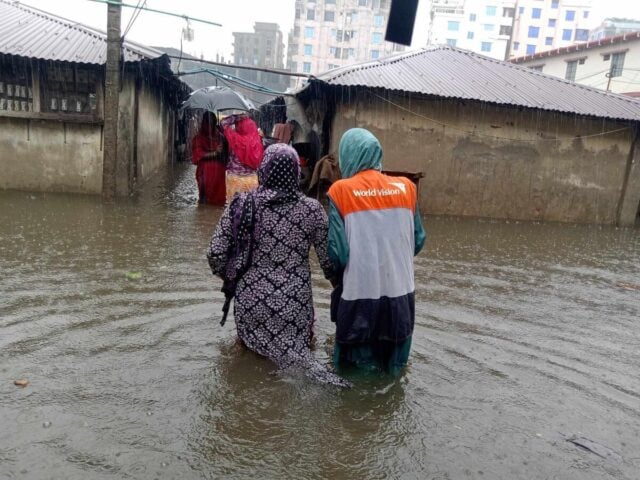
In April 2026, Cyclone Maila rapidly intensified over the South Pacific, bringing destructive winds, heavy rainfall, and dangerous storm surges to parts of the Solomon Islands region and nearby Pacific nations. Early reports indicate flooding, infrastructure damage, displacement of families, and heightened risk of landslides in vulnerable coastal and river communities.
FAQs: What you need to know about the Solomon Islands
Explore frequently asked questions about the Solomon Islands, and learn how you can help.
- Fast facts: Solomon Islands
- Are the Solomon Islands at major risk for natural disasters?
- Why do earthquakes and tsunamis occur in the Solomon Islands?
- What other environmental hazards affect the Solomon Islands?
- How can I help children and families affected by disasters in the Solomon Islands?
- World Vision’s work in the Solomon Islands
- Timeline of disasters
Fast facts: Solomon Islands
- Six major islands and about 900 smaller islands
- Population of about 600,000 people
- An economy based on agriculture, forestry, and fisheries
- One of the most impoverished countries in the Pacific, partially due to frequent disasters.
- Honiara, the capital, on Guadalcanal Island, was the site of a major World War II campaign in the Pacific.
Are the Solomon Islands at major risk for natural disasters?
Yes, the Solomon Islands is one of the most disaster-prone and climate-vulnerable countries in the Pacific. Disasters include:
- Earthquakes
- Tsunamis
- Volcanic eruptions
- Cyclones and other flooding hazards
- Outbreaks of dengue fever
- Diseases related to unclean water and poor sanitation
The Solomon Islands and Vanuatu are among the world’s most seismically active landmasses, second only to Japan. It’s not unusual for the Solomon Islands to have 60 to 70 earthquakes a year. Many of these are small shifts in the earth’s crust that may not be noticed, but there are also large quakes with many aftershocks.
Why do earthquakes and tsunamis occur in the Solomon Islands?
The Solomon Islands sit above a subduction zone where the Australia and Pacific tectonic plates meet. Their collision can cause forceful earthquakes and shifts in the ocean floor that generate tsunamis.
What other environmental hazards affect the Solomon Islands?
The Solomon Islands is experiencing rising sea levels that could have a devastating effect on agriculture. Already, soil erosion and saltwater intrusion into agricultural plots are diminishing the amount of arable land. With about 75% of the population involved in farming, that’s a grave concern. Increased levels of malnutrition — already a problem — could also result.
How can I help children and families affected by disasters in the Solomon Islands?
- Pray for children and families impacted by disasters.
- Give to provide life-saving aid and relief supplies to families following a disaster.
- Learn more about World Vision’s disaster relief work.
World Vision’s work in the Solomon Islands
World Vision has worked in the Solomon Islands since 1980, operating in Makira, Malaita, Guadalcanal, Temotu, and the Central provinces. Our work focuses on clean water, sanitation, and hygiene; economic empowerment; preventing gender-based violence; education; disaster planning and prevention; maternal and child health; and nutrition.
Disaster response
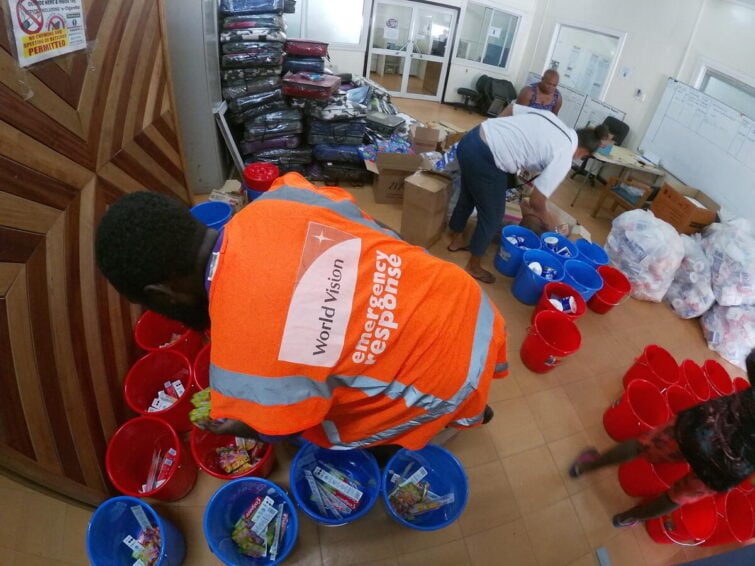
World Vision supported government-led humanitarian and emergency responses following the earthquakes, tsunamis, and flooding events, including major responses in 2013, 2016, and 2026. Support has included shelter kits, hygiene supplies, clean water access, boats, and emergency food assistance.
Following Cyclone Maila in 2026, response efforts are focused on rapid needs assessment, emergency relief distribution, and restoring access to safe water and shelter in affected communities.
Disaster preparedness
Given the distances and isolation of many of these island communities, responding to disasters is more challenging and problematic in the Solomon Islands. Thus, disaster preparedness is critical.
Through World Vision’s work in disaster risk reduction, we help communities prepare for potential disasters to mitigate their impact. This work is critical to development, protecting lives and livelihoods so people can break free from poverty.
World Vision disaster resilience activities include:
- Training in disaster risk reduction
- Facilitating community-led disaster evacuation simulations
- Establishing disaster committees and helping to formulate disaster preparedness plans
- Providing livestock and livestock management training for alternative income generation
- Building the capacity of local health workers
- Raising awareness of disease prevention
- Restoring and improving water-supply systems
Timeline of disasters
-
- 2007 — April 2: A magnitude 8.1 quake results in a devastating tsunami that kills at least 34 people and displaces 5,000 in coastal areas of Western and Choiseul provinces.
- 2013 — February 6: Off the coast of the Santa Cruz Islands in the southeast Solomon Islands, a magnitude 8.0 quake generates a 3-foot tsunami wave that kills 10 and damages or destroys more than 700 homes.
- 2014 — April 3: Flash flooding in Honiara, the capital, and the Guadalcanal Plains to the east, leaves 22 people dead and 9,000 homeless.
- 2016 — December 9: Three provinces are affected by a magnitude 8 earthquake. Aftershocks followed, including a second magnitude 6.9 quake the next day.
- 2026 — April: Cyclone Maila brings severe wind and rain impacts across parts of the Solomon Islands region, compounding existing vulnerabilities from flooding, coastal erosion, and limited infrastructure resilience.