


Disaster Relief
More than 90 percent of disaster-related deaths occur in developing countries. World Vision already works in these hard places, responding with life-saving speed when disaster strikes. Your support helps bring immediate disaster relief and supplies, and long-term recovery so people can rebuild their lives.

Two brothers who work in construction have been helping their community rebuild after a tornado plowed through their neighborhood in Bowling Green, Kentucky, on December 10, 2021. Read how World Vision partnered with a local church to come alongside them for long-term recovery.
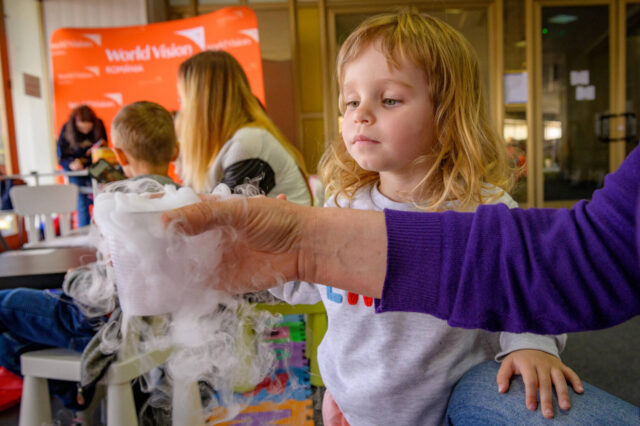
As the war in Ukraine enters another year, World Vision continues to bring global expertise in partnering to support children and their families whose lives have been disrupted since early 2022. Learn more about World Vision’s Child-Friendly Spaces and how they offer educational routine, emotional safety, and a social environment to focus on processing and healing from trauma and grief.
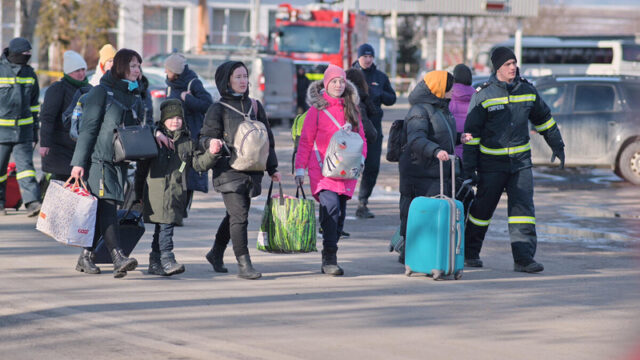
In the early days of the Ukraine crisis, mothers wanted to stay in Ukraine, but as violence escalated, they finally felt forced to flee. They share their stories of the problems and help they found along their journey.
69
disasters and humanitarian emergencies in 72 countries responded to by World Vision globally, including the COVID-19 global health pandemic.
Funded by World Vision donors around the world in fiscal year 2020.
29 countries
where we work with the World Food Program to support 12 million people.
Funded by World Vision donors around the world in fiscal year 2020.
78.2 million
affected by emergencies around the world who received assistance.
Funded by World Vision donors around the world in fiscal year 2020.
Our Disaster Response Approach
How quickly does World Vision respond to a disaster, and what is your immediate response?
When disaster strikes, World Vision adopts a “first-in, last-out” approach: We first respond with life-saving emergency aid, and then we stay for the long term to help families recover and rebuild.
- Within the first couple of hours after a disaster, World Vision staff members closest to the disaster respond with reports on the level of severity and need.
- Within 24 to 72 hours of the disaster, our global rapid response team is on the ground, making assessments and beginning to provide emergency relief.
- Within 72 hours of the disaster, our pre-positioned relief supplies are loaded up, transported, and distributed from local and international warehouses.
- For the first week, we continuously distribute emergency aid and relief to residents affected by the disaster.
Over the following month, we work to help families stabilize by providing assistance with temporary shelter, water, sanitation and hygiene, child protection activities, healthcare, and economic opportunities.
How do you help residents recover from the trauma of disaster over the long term?
We are quick to respond to disasters, but we also focus on helping to rebuild the lives of disaster-affected families and communities over the long term. Large-scale disasters often leave hundreds of thousands of people homeless and vulnerable.
While emergency relief is necessary and saves lives, it is not enough. We help disaster survivors by assisting their transition from relief mode to recovery and rebuilding mode. This recovery and rebuilding phase involves a transition to permanent housing, clean water, sustainable sources of food, access to education, and re-established livelihoods.
When disaster strikes, which World Vision employees respond?
World Vision’s Global Rapid Response Team brings together international disaster experts from around the world, who are deployed within hours of a major emergency to support local teams and communities. The global rapid response team includes relief managers, program officers, and specialists in health and nutrition, human resources, finance, logistics, security, food aid, child protection, information technology, and communications — all working as a team to provide effective emergency relief.
In a large-scale response, World Vision collaborates with the United Nations and other local aid agencies. This collaboration helps avoid duplication, maximize efficiencies, ensure all needs are met, and eliminate gaps in humanitarian response.
How do you prepare to make sure you’re ready when an emergency occurs?
Having a disaster response fund ready to use, pre-positioning supplies like non-food items, and having staff prepared and trained to respond to emergencies is increasingly important to how we respond to disasters.
The global pre-positioning resource network is our designated team that makes sure we’re prepared to respond rapidly to any disaster anywhere in the world. The team pre-positions the supplies and develops preparedness plans, programming standards, logistic assessments, and logistic plans.
The supplies are ready to go in seven different warehouses that are strategically located all around the world. These relief supplies are ready for up to 225,000 beneficiaries at any time, ensuring that those affected by disasters will have emergency supplies distributed to them quickly and efficiently.
Disaster Response Resources
Venezuela 2 year report (pdf)
World Vision’s Venezuela response two years on has expanded to seven countries and reached more than 560,000 people with assistance in WASH, child protection, health, food security, livelihoods and education.
Syria 10 year report (pdf)
This report uses an evidence-base to show the incredible loss of human capital in Syria as a result of a continuous cycle of grave violations against children, heavy economic costs, and shattered opportunities for future generations.
More than 90 percent of disaster-related deaths occur in developing countries. World Vision already works in these hard places, responding with life-saving speed when disaster strikes. Your support helps bring immediate disaster relief and supplies, and long-term recovery so people can rebuild their lives.
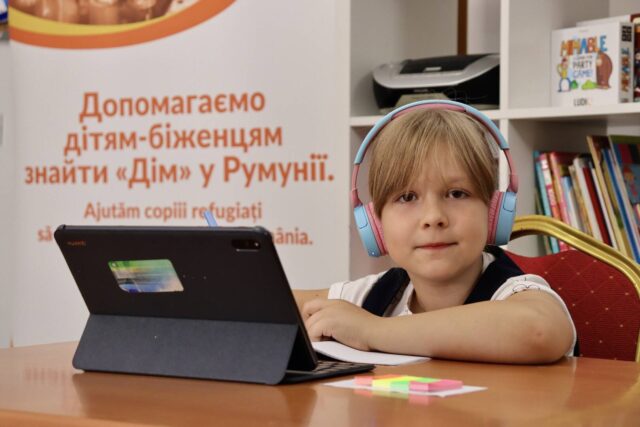
As the war in Ukraine continues to cause devastation and displacement, over 6.3 million refugees, mostly women and children, have sought safety in Europe and beyond. Children continue to face disruptions in education and the absence of safe and stable environments. Learn more about the conflict and what World Vision is doing to help people affected by the Ukraine crisis.
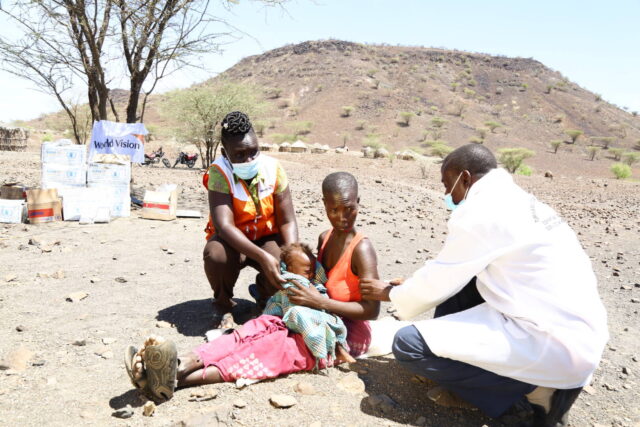
By air, land, and sea, World Vision is racing to deliver emergency food supplies across East Africa for families in need.
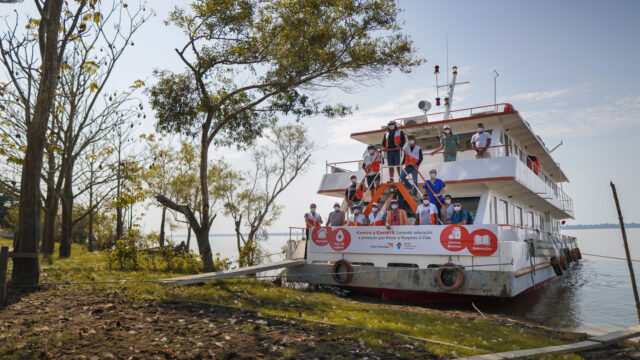
The Solidarity, a hospital ship operated by World Vision, has sailed to isolated communities to deliver food boxes, essential first-aid supplies, and provide medical care to 1,000 families in Brazil hit hard by the coronavirus pandemic.
69
disasters and humanitarian emergencies in 72 countries responded to by World Vision globally, including the COVID-19 global health pandemic.
Funded by World Vision donors around the world in fiscal year 2020.
29 countries
where we work with the World Food Program to support 12 million people.
Funded by World Vision donors around the world in fiscal year 2020.
78.2 million
affected by emergencies around the world who received assistance.
Funded by World Vision donors around the world in fiscal year 2020.
Our Disaster Response Approach
How quickly does World Vision respond to a disaster, and what is your immediate response?
When disaster strikes, World Vision adopts a “first-in, last-out” approach: We first respond with life-saving emergency aid, and then we stay for the long term to help families recover and rebuild.
- Within the first couple of hours after a disaster, World Vision staff members closest to the disaster respond with reports on the level of severity and need.
- Within 24 to 72 hours of the disaster, our global rapid response team is on the ground, making assessments and beginning to provide emergency relief.
- Within 72 hours of the disaster, our pre-positioned relief supplies are loaded up, transported, and distributed from local and international warehouses.
- For the first week, we continuously distribute emergency aid and relief to residents affected by the disaster.
Over the following month, we work to help families stabilize by providing assistance with temporary shelter, water, sanitation and hygiene, child protection activities, healthcare, and economic opportunities.
How do you help residents recover from the trauma of disaster over the long term?
We are quick to respond to disasters, but we also focus on helping to rebuild the lives of disaster-affected families and communities over the long term. Large-scale disasters often leave hundreds of thousands of people homeless and vulnerable.
While emergency relief is necessary and saves lives, it is not enough. We help disaster survivors by assisting their transition from relief mode to recovery and rebuilding mode. This recovery and rebuilding phase involves a transition to permanent housing, clean water, sustainable sources of food, access to education, and re-established livelihoods.
When disaster strikes, which World Vision employees respond?
World Vision’s Global Rapid Response Team brings together international disaster experts from around the world, who are deployed within hours of a major emergency to support local teams and communities. The global rapid response team includes relief managers, program officers, and specialists in health and nutrition, human resources, finance, logistics, security, food aid, child protection, information technology, and communications — all working as a team to provide effective emergency relief.
In a large-scale response, World Vision collaborates with the United Nations and other local aid agencies. This collaboration helps avoid duplication, maximize efficiencies, ensure all needs are met, and eliminate gaps in humanitarian response.
How do you prepare to make sure you’re ready when an emergency occurs?
Having a disaster response fund ready to use, pre-positioning supplies like non-food items, and having staff prepared and trained to respond to emergencies is increasingly important to how we respond to disasters.
The global pre-positioning resource network is our designated team that makes sure we’re prepared to respond rapidly to any disaster anywhere in the world. The team pre-positions the supplies and develops preparedness plans, programming standards, logistic assessments, and logistic plans.
The supplies are ready to go in seven different warehouses that are strategically located all around the world. These relief supplies are ready for up to 225,000 beneficiaries at any time, ensuring that those affected by disasters will have emergency supplies distributed to them quickly and efficiently.
Disaster Response Resources
Venezuela 2 year report (pdf)
World Vision’s Venezuela response two years on has expanded to seven countries and reached more than 560,000 people with assistance in WASH, child protection, health, food security, livelihoods and education.
Syria 10 year report (pdf)
This report uses an evidence-base to show the incredible loss of human capital in Syria as a result of a continuous cycle of grave violations against children, heavy economic costs, and shattered opportunities for future generations.
Ways to Give to Disaster Relief
Global Hunger Crisis Response
The largest global hunger crisis in modern history has left 30 million children dangerously malnourished, threatening their health, hope, and futures. World Vision is responding in 28 of the hardest-hit countries, and our track record is one of success. By the grace of God, over the last 10 years, 89% of the severely malnourished children we treated made a full recovery.
Thanks to donor contributions, combined with public grants from partnerships like these, every $1 you donate to Global Hunger Response delivers $7 in impact.
Become a Disaster Relief Partner
With decades of experience and an established network of global staff and pre-positioned resources, we respond to major emergencies worldwide quickly and effectively — and we stay to help rebuild lives for children, families, and communities.
Your support can help ensure rapid delivery of life-saving help and supplies, as well as long-term support to help vulnerable families recover. Thanks to donor contributions, combined with public grants from partnerships, every $1 you donate to the Disaster Relief Fund delivers $5 in impact.
Monthly giving is the most effective way to help children and families who need it most. Plus, it lowers costs, which means more of your gift helps kids!
Ways to Give to Disaster Relief
Global Hunger Crisis Response
The largest global hunger crisis in modern history has left 30 million children dangerously malnourished, threatening their health, hope, and futures. World Vision is responding in 28 of the hardest-hit countries, and our track record is one of success. By the grace of God, over the last 10 years, 89% of the severely malnourished children we treated made a full recovery.
Thanks to donor contributions, combined with public grants from partnerships like these, every $1 you donate to Global Hunger Response delivers $5 in impact.
Become a Disaster Relief Partner
With decades of experience and an established network of global staff and pre-positioned resources, we respond to major emergencies worldwide quickly and effectively — and we stay to help rebuild lives for children, families, and communities.
Your support can help ensure rapid delivery of life-saving help and supplies, as well as long-term support to help vulnerable families recover. Thanks to donor contributions, combined with public grants from partnerships, every $1 you donate to the Disaster Relief Fund delivers $4 in impact.
Monthly giving is the most effective way to help children and families who need it most. Plus, it lowers costs, which means more of your gift helps kids!
We work hand in hand with each community to address their unique needs — and achieve lasting change.
Choose one and see how our work gets done.


Health

Poverty in America

Economic empowerment

Clean water

Education

Christian faith

Gender equality

Disability inclusion

Refugees & fragile states

Child sponsorship