


Economic empowerment
Nearly 650 million people worldwide are living below the international poverty line of less than $2.15 a day. When you’re that far behind, it’s hard to get ahead. That’s why we help families break the cycle of poverty by providing access to small loans, business training, savings groups, improved market access, and more to support livelihoods.
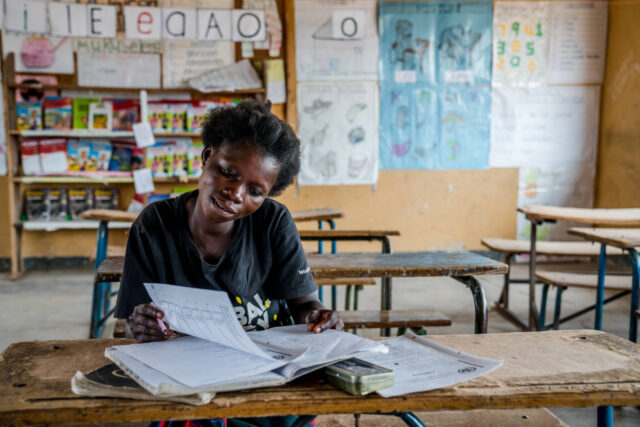
Prisca, a single mother in the Buyantanshi community in Zambia, is using money she saved through a World Vision savings group to fund her own education as well as meet the needs of her baby boy. Through mentorship, financial literacy training, and the Biblical Empowered Worldview program, she’s come to understand that even small savings can redirect her future.
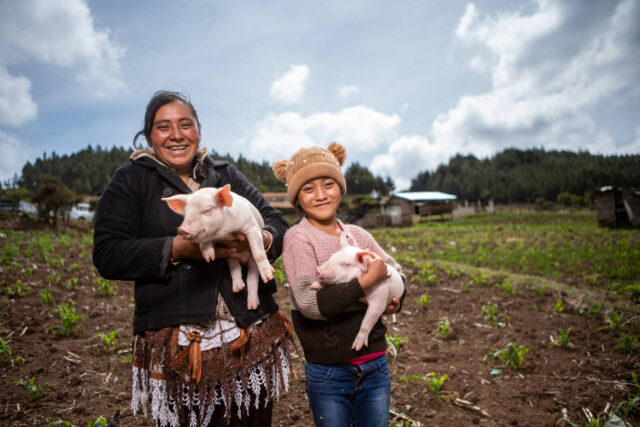
A Guatemalan family is paving a path toward financial security thanks to the gift of pigs. Through a World Vision program, Nicolasa has invested time and dedication to learning the trade of raising piglets.
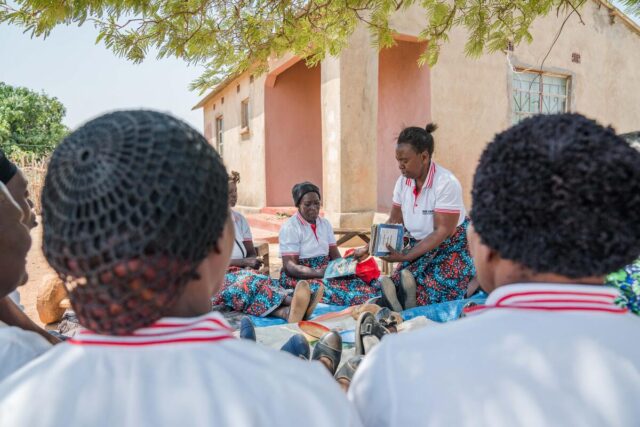
Through participation in a savings group in rural Zambia, women are changing not only their own lives but those of their community members as well.
577,458
people participated in Savings for Transformation groups, 78% women, in 2016–2017. Thanks to the support of World Vision donors around the world.
265,613
clients accessed credit, over two-thirds of them women, in 2017. Thanks to the support of World Vision donors around the world.
Our economic empowerment approach
Where does economic development fit in the timeline of World Vision’s community work?
When we first partner with a community, we focus on the most immediate needs, like access to nutritious food, clean water, and healthcare. Then we address longer-term needs like livelihoods — including skills training, community-managed savings groups, and microloans, all of which help fuel the local economy and lead to sustainable progress.
We train people to start and grow small businesses, improve farming methods, and work together to form cooperatives. This helps parents become better providers for their children — so those children can grow up better nourished, better educated, and better equipped to break the generational cycle of poverty.
What does economic development mean in the communities where you work?
We help communities solve economic problems by investing in their entrepreneurial spirit through microfinance, savings groups, and market/value chain development.
- Microloans provide individuals and groups with the opportunity to start or grow a business. These loans were $551 on average in FY21 and are repaid at remarkably high rates — 97% in FY21. World Vision donors provide the capital for the loans, which are managed and disbursed through VisionFund International, World Vision’s microfinance subsidiary. Once the loans are repaid, they are recycled back into the community — often to the same people, who continue to expand their businesses and provide jobs for others in the community.
- Through savings groups, we train community members — whose low incomes often disqualify them from traditional banking services — to save money on a regular basis. These groups of 15 to 25 members meet weekly to put money into a joint savings account, from which they take turns borrowing. The savings also provides a safety net against economic shocks like family illness, weather-related disasters, and more.
- Instead of farming just to feed their families, many subsistence farmers want to do more. They want to meet the demand for crops, livestock, or products in bigger and more distant markets. We train farmers to form producer groups, select suitable products, improve the value of their products, and negotiate for better prices.
How does World Vision work to break the poverty cycle in communities?
Breaking the poverty cycle is a complex, multisectoral process that varies greatly between countries and even communities. However, it’s always true that a child’s parents have the greatest influence on their child’s economic well-being. Our strategy focuses on helping individual households improve their incomes, helping to break the poverty cycle within that family and, consequently, their community.
Through support like microloans, savings groups, business and agricultural training, and market/value chain development, World Vision empowers individuals to start their own businesses, learn and practice savings habits, and improve their incomes, all of which enables them to better provide for their families.
While breaking the poverty cycle does not rely entirely on families improving their economic well-being, the encouragement a family receives from having their own business and being self-sustaining is instrumental to transforming the lives of their children, other families in their community, and the community as a whole.
What are microfinance and microloans?
Microfinance is the provision of financial services, such as microloans, to low-income individuals who do not qualify for typical banking services. Microloans involve lending small amounts of money to small business owners or farmers — especially women. These loans are designed to increase business incomes while being affordable for borrowers. When you donate through World Vision to provide a microloan, that loan is managed and disbursed through World Vision’s microfinance subsidiary, VisionFund. When a loan is repaid, the funds are recycled to help borrowers break the cycle of poverty for good.
How does microfinance work?
- Hardworking low-income entrepreneurs, typically women with no credit history or collateral, apply for small loans to start or grow a business.
- The loan is managed and disbursed through World Vision’s microfinance subsidiary, VisionFund International.
- The entrepreneur makes payments until the loan is repaid in full.
- The repaid loan money recycles back into the community, funding additional loans.
- As the entrepreneur’s business grows, they are able to pay for food, medical care, clothing, and more for their families — things that improve the well-being of their children and help grow their community’s economy.
Economic empowerment resources
Market Systems Development Toolkit (PDF)
This toolkit provides practical guidelines for how to apply a more systemic lens to livelihood, economic, and private sector development programs.
Selection, Planning, and Management of Income Generating Activities (PDF)
This manual empowers semi-literate VS&L clients to choose, plan, and manage their economic activities.
Nearly 650 million people worldwide are living below the international poverty line of less than $2.15 a day. When you’re that far behind, it’s hard to get ahead. That’s why we help families break the cycle of poverty by providing access to small loans, business training, savings groups, improved market access, and more to support livelihoods.
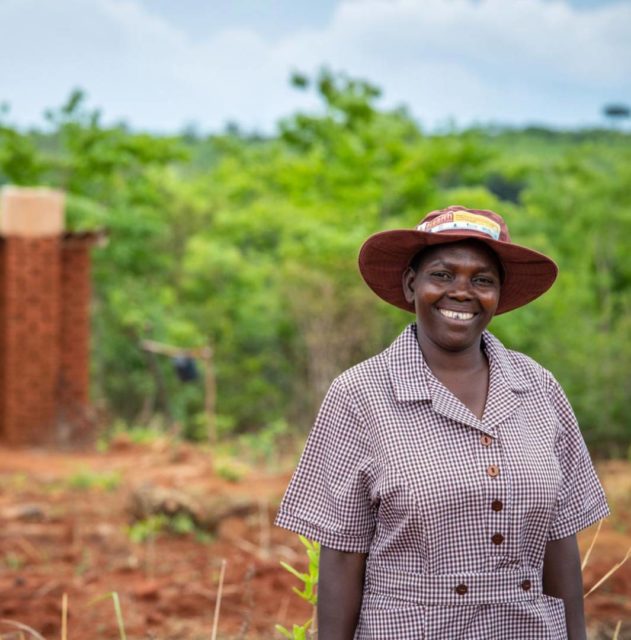
Gertrude shares her story about how savings groups and health groups through the USAID-funded ENSURE program helped change her destiny by empowering her to lead change in her community and provide for her family.
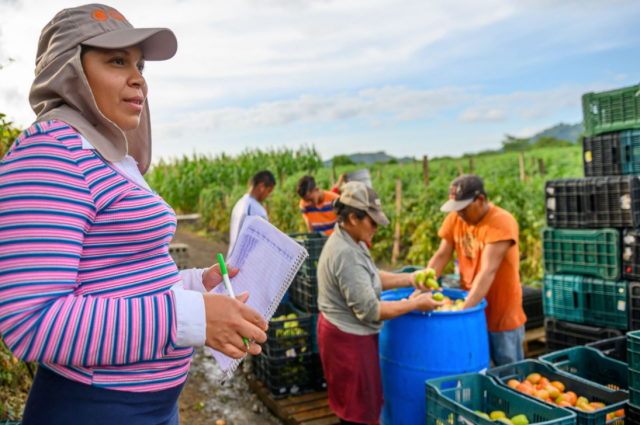
At 18, Jose Luis left his home and family to seek a brighter future elsewhere. Now he’s built a brighter future for himself, his community, and his son back in Honduras.
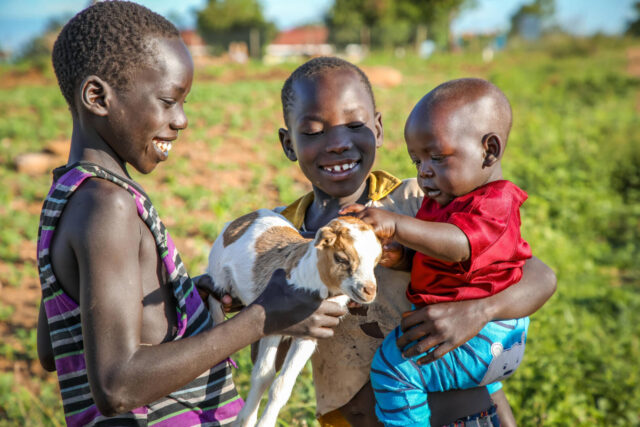
A family fleeing conflict in South Sudan lost everything and has started over in a refugee settlement in Uganda. World Vision Gift Catalog goats are helping them rebuild their lives.
577,458
people participated in Savings for Transformation groups, 78% women, in 2016–2017. Thanks to the support of World Vision donors around the world.
265,613
clients accessed credit, over two-thirds of them women, in 2017. Thanks to the support of World Vision donors around the world.
Our economic empowerment approach
Where does economic development fit in the timeline of World Vision’s community work?
When we first partner with a community, we focus on the most immediate needs, like access to nutritious food, clean water, and healthcare. Then we address longer-term needs like livelihoods — including skills training, community-managed savings groups, and microloans, all of which help fuel the local economy and lead to sustainable progress.
We train people to start and grow small businesses, improve farming methods, and work together to form cooperatives. This helps parents become better providers for their children — so those children can grow up better nourished, better educated, and better equipped to break the generational cycle of poverty.
What does economic development mean in the communities where you work?
We help communities solve economic problems by investing in their entrepreneurial spirit through microfinance, savings groups, and market/value chain development.
- Microloans provide individuals and groups with the opportunity to start or grow a business. These loans were $551 on average in FY21 and are repaid at remarkably high rates — 97% in FY21. World Vision donors provide the capital for the loans, which are managed and disbursed through VisionFund International, World Vision’s microfinance subsidiary. Once the loans are repaid, they are recycled back into the community — often to the same people, who continue to expand their businesses and provide jobs for others in the community.
- Through savings groups, we train community members — whose low incomes often disqualify them from traditional banking services — to save money on a regular basis. These groups of 15 to 25 members meet weekly to put money into a joint savings account, from which they take turns borrowing. The savings also provides a safety net against economic shocks like family illness, weather-related disasters, and more.
- Instead of farming just to feed their families, many subsistence farmers want to do more. They want to meet the demand for crops, livestock, or products in bigger and more distant markets. We train farmers to form producer groups, select suitable products, improve the value of their products, and negotiate for better prices.
How does World Vision work to break the poverty cycle in communities?
Breaking the poverty cycle is a complex, multisectoral process that varies greatly between countries and even communities. However, it’s always true that a child’s parents have the greatest influence on their child’s economic well-being. Our strategy focuses on helping individual households improve their incomes, helping to break the poverty cycle within that family and, consequently, their community.
Through support like microloans, savings groups, business and agricultural training, and market/value chain development, World Vision empowers individuals to start their own businesses, learn and practice savings habits, and improve their incomes, all of which enables them to better provide for their families.
While breaking the poverty cycle does not rely entirely on families improving their economic well-being, the encouragement a family receives from having their own business and being self-sustaining is instrumental to transforming the lives of their children, other families in their community, and the community as a whole.
What are microfinance and microloans?
Microfinance is the provision of financial services, such as microloans, to low-income individuals who do not qualify for typical banking services. Microloans involve lending small amounts of money to small business owners or farmers — especially women. These loans are designed to increase business incomes while being affordable for borrowers. When you donate through World Vision to provide a microloan, that loan is managed and disbursed through World Vision’s microfinance subsidiary, VisionFund. When a loan is repaid, the funds are recycled to help borrowers break the cycle of poverty for good.
How does microfinance work?
- Hardworking low-income entrepreneurs, typically women with no credit history or collateral, apply for small loans to start or grow a business.
- The loan is managed and disbursed through World Vision’s microfinance subsidiary, VisionFund International.
- The entrepreneur makes payments until the loan is repaid in full.
- The repaid loan money recycles back into the community, funding additional loans.
- As the entrepreneur’s business grows, they are able to pay for food, medical care, clothing, and more for their families — things that improve the well-being of their children and help grow their community’s economy.
Economic empowerment resources
Market Systems Development Toolkit (PDF)
This toolkit provides practical guidelines for how to apply a more systemic lens to livelihood, economic, and private sector development programs.
Selection, Planning, and Management of Income Generating Activities (PDF)
This manual empowers semi-literate VS&L clients to choose, plan, and manage their economic activities.
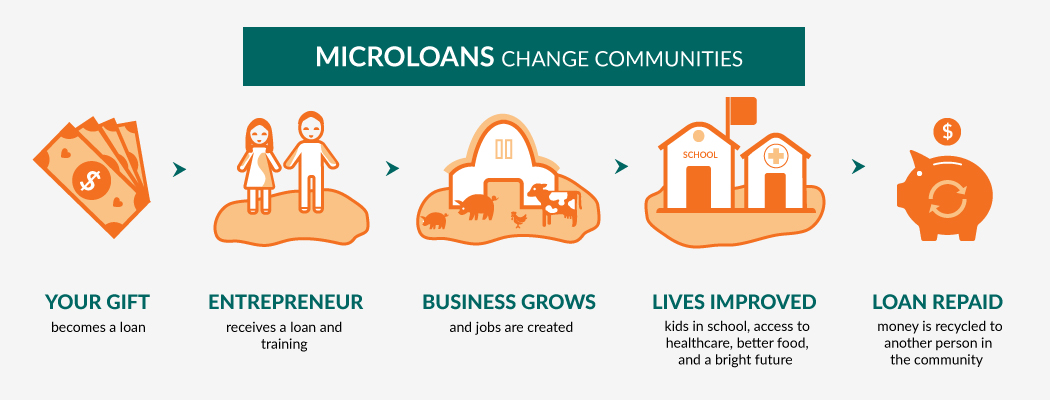
MICROLOANS CHANGE COMMUNITIES

YOUR GIFT
becomes a loan
ENTREPRENEUR
receives a loan and training
BUSINESS GROWS
and jobs are created
LIVES IMPROVED
kids in school, access to healthcare, better food, and a bright future
LOAN REPAID
money is recycled to another person in the community
Ways to support economic empowerment
See specific ways you can to give to support economic empowerment
Goat
Your gift of a goat will be a much-celebrated blessing for a family in need — and can even help them make lasting change in their community.
Goat milk provides great protein to help children grow. A healthy dairy goat can give up to 16 cups of milk a day. The family can also sell any extra milk the goats produce to earn money for medicines and other necessities.
Become an Economic Empowerment Partner
Worldwide, 1 in 9 people survive on less than $2.15 a day. And many families in struggling communities have never been able to save money, get loans to start or build a small business, or even learn better farming practices.
You can help them break the cycle of poverty. When hardworking people get access to tools and opportunities, they’re empowered to change their own futures — and pass those skills along to the next generation.
Monthly giving is the most effective way to help children and families who need it most. Plus, it lowers costs, which means more of your gift helps kids!
Ways to support economic empowerment
See specific ways you can to give to support economic empowerment
Goat
Your gift of a goat will be a much-celebrated blessing for a family in need — and can even help them make lasting change in their community.
Goat milk provides great protein to help children grow. A healthy dairy goat can give up to 16 cups of milk a day. The family can also sell any extra milk the goats produce to earn money for medicines and other necessities.
Become an Economic Empowerment Partner
Worldwide, 1 in 9 people survive on less than $2.15 a day. And many families in struggling communities have never been able to save money, get loans to start or build a small business, or even learn better farming practices.
You can help them break the cycle of poverty. When hardworking people get access to tools and opportunities, they’re empowered to change their own futures — and pass those skills along to the next generation.
Monthly giving is the most effective way to help children and families who need it most. Plus, it lowers costs, which means more of your gift helps kids!
Ways to support economic empowerment
See specific ways you can to give to support economic empowerment
Goat
Your gift of a goat will be a much-celebrated blessing for a family in need — and can even help them make lasting change in their community.
Goat milk provides great protein to help children grow. A healthy dairy goat can give up to 16 cups of milk a day. The family can also sell any extra milk the goats produce to earn money for medicines and other necessities.
Become an Economic Empowerment Partner
Worldwide, 1 in 9 people survive on less than $2.15 a day. And many families in struggling communities have never been able to save money, get loans to start or build a small business, or even learn better farming practices.
You can help them break the cycle of poverty. When hardworking people get access to tools and opportunities, they’re empowered to change their own futures — and pass those skills along to the next generation.
Monthly giving is the most effective way to help children and families who need it most. Plus, it lowers costs, which means more of your gift helps kids!
Ways to support economic empowerment
See specific ways you can to give to support economic empowerment
Support economic empowerment: $30+
In the poorest places of the world, many hardworking parents lack the resources and opportunities they need to improve their children’s lives and break free from the cycle of poverty. Your gift will equip people with the tools and opportunities they need to empower their own futures — and pass those skills along to the next generation.
Monthly giving is the most effective way to help children and families who need it most. It lowers costs, which means more of your gift helps kids!
Become an Economic Empowerment Partner
Worldwide, 1 in 9 people survive on less than $2.15 a day. And many families in struggling communities have never been able to save money, get loans to start or build a small business, or even learn better farming practices.
You can help them break the cycle of poverty. When hardworking people get access to tools and opportunities, they’re empowered to change their own futures — and pass those skills along to the next generation.
Monthly giving is the most effective way to help children and families who need it most. Plus, it lowers costs, which means more of your gift helps kids!
We work hand in hand with each community to address their unique needs — and achieve lasting change.
Choose one and see how our work gets done.


Health

Poverty in America
Economic empowerment

Clean water

Education

Christian faith

Gender equality

Disability inclusion

Refugees & fragile states

Child sponsorship