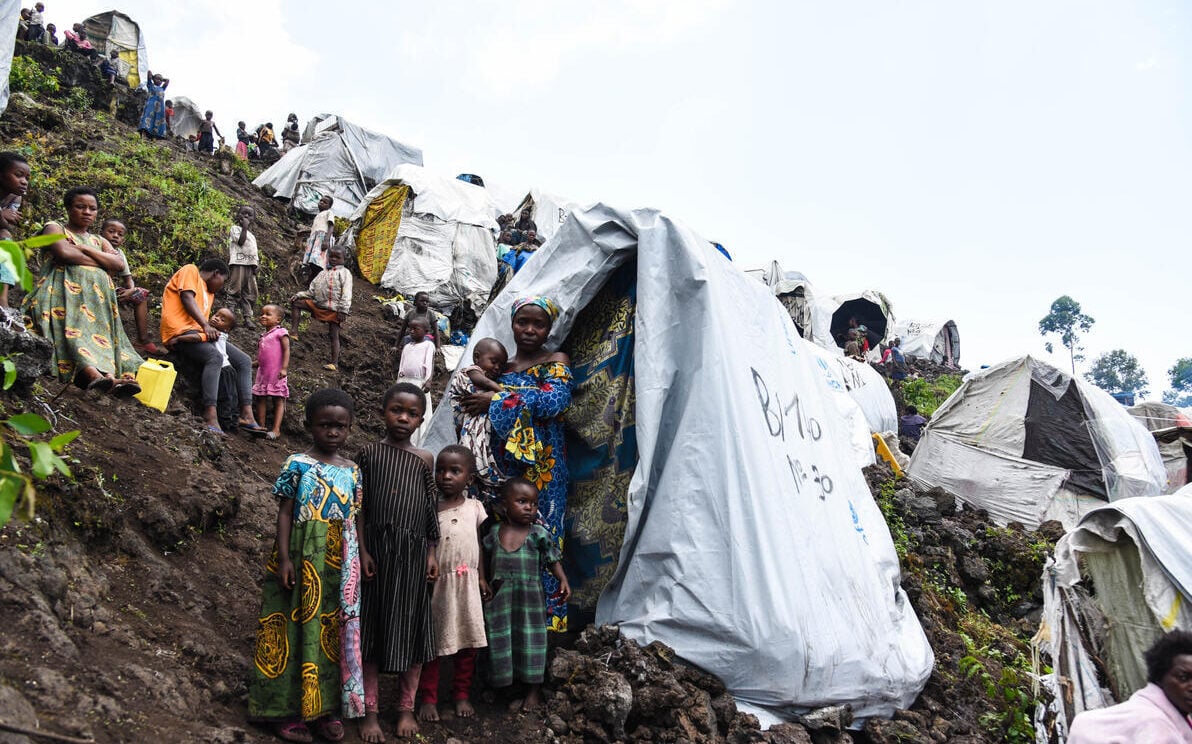
The Democratic Republic of the Congo (DRC) is facing one of the world’s most complex and prolonged humanitarian crises, driven by armed conflict, mass displacement, food insecurity, and recurring disease outbreaks. More than 15 million children are affected by violence, hunger, and lack of essential services, as instability continues across eastern and central provinces.
In 2025–2026, escalating violence in eastern DRC, including renewed clashes and continued displacement in North Kivu, South Kivu, and Ituri, has left families without safe shelter, food, or access to healthcare. The situation has been further compounded by natural disasters, including deadly landslides in mining areas of Masisi Territory that have killed over 200 people and destroyed livelihoods.
At the same time, recurrent Ebola outbreaks are placing additional strain on already fragile health systems, underscoring the overlapping nature of crises affecting the country.
DRC conflict: Facts, FAQs, and how to help
Explore facts and FAQs about the crisis in the DRC, and learn how you can help.
- Fast facts: DRC situation and conflict
- What is currently happening in the DRC?
- How are conditions in the DRC affecting children?
- What are some of the greatest needs of people in the DRC?
- What is World Vision doing to help vulnerable people in the DRC?
- How can I help affected children and families in the DRC?
Fast facts: DRC situation and conflict
- The Democratic Republic of the Congo, which spans an area comparable to Western Europe, is the second-largest country on the African continent.
- Approximately 112 million people live in the country.
- More than 14 million people, including 8 million children, require humanitarian aid.
- The DRC shares its borders with nine neighboring countries: Angola, Burundi, the Central African Republic, the Republic of the Congo, Rwanda, South Sudan, Tanzania, Uganda, and Zambia.
- The DRC is one of the five poorest nations in the world, despite its abundance of natural resources.
- According to the U.N. Refugee Agency (UNHCR), 7 million people have been displaced within the DRC due to conflict as of December 2022. Over 1 million have crossed borders seeking asylum.

What is currently happening in the DRC?
The Democratic Republic of the Congo is facing a worsening humanitarian crisis fueled by armed conflict, mass displacement, hunger, and disease outbreaks. Violence in eastern provinces, including North Kivu, South Kivu, and Ituri, continues to force people from their communities, disrupting access to food, healthcare, education, and livelihoods.
Food insecurity is severe, with an estimated 26.6 million people projected to face crisis levels of hunger in 2026, according to the World Food Programme. At the same time, the country is battling recurring outbreaks of cholera, mpox, measles, and Ebola.
How are conditions in the DRC affecting children?
Children in the Democratic Republic of the Congo are facing severe risks from conflict, hunger, displacement, and disease outbreaks. Violence in eastern DRC continues to force people from their communities, exposing children to trauma, exploitation, family separation, and recruitment by armed groups.
At the same time, limited access to healthcare, clean water, and nutritious food is increasing the risk of malnutrition and disease. Recurring outbreaks of Ebola, cholera, measles, mpox, and malaria are placing additional pressure on fragile health systems, especially in conflict-affected communities.
Millions of children also face disruptions to education as insecurity and displacement force schools to close or become inaccessible. “Our main concern is for children, who are the most vulnerable in a region already heavily affected by conflict,” said Philippe Guiton, national director of World Vision in DRC.
“Ituri is already facing an alarming situation of acute malnutrition, combined with extremely limited access to healthcare in remote areas,” said David Munkley, East Zone Director for World Vision in DRC. “A rapid and coordinated response will help save lives and reach the greatest number of affected people.”
What are some of the greatest needs of people in the DRC?
What is World Vision doing to help vulnerable people in the DRC?
World Vision dedicated its efforts to improving the health, nutrition, protection, and education of millions of the most vulnerable children in the Democratic Republic of the Congo. Our broader goal is to provide vital aid to 10 million vulnerable women and men facing extreme hardship. In 2023, World Vision reached more than 3.4 million people through our lifesaving efforts and programming in the DRC.