


Health
Today, 13,400 children under age 5 will die of mostly preventable causes, such as diarrhea, malaria, and pneumonia. We focus on ensuring child and maternal health by promoting health and nutrition practices and preventing major causes of disease.
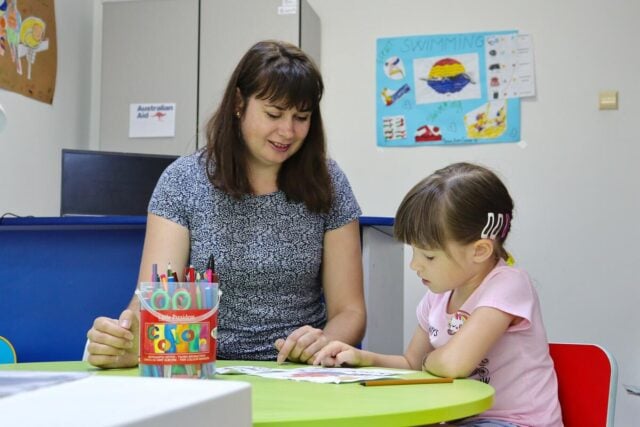
World Vision’s Happy Bubble in Romania provides a safe haven for displaced Ukrainian children, focusing on enhancing their emotional well-being. Through activities like art and play therapy, children learn to articulate their feelings and develop resilience.
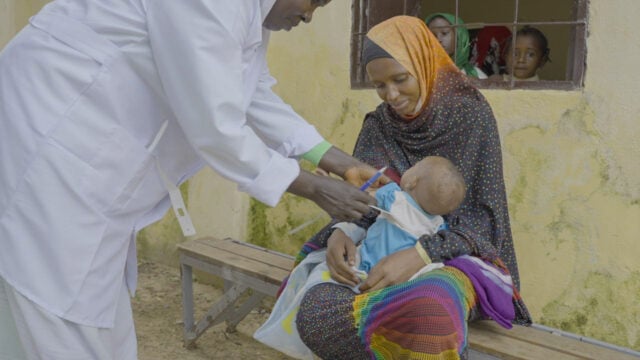
Hawa, a displaced mother of three, found support for her severely malnourished daughter at a World Vision mobile clinic in Blue Nile State, Sudan. These clinics offer crucial health and nutrition support to displaced families and host communities.
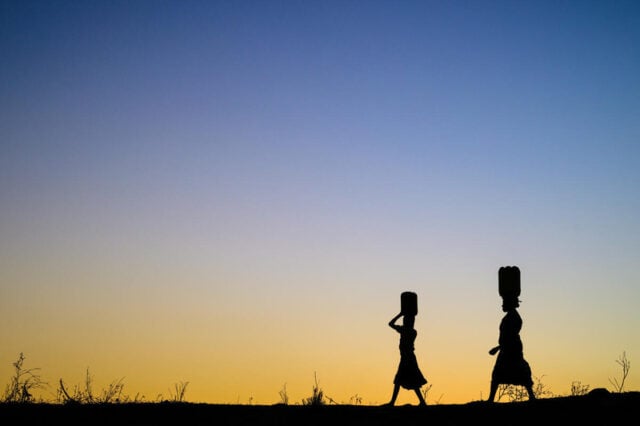
Anzazi gave birth at a clinic that had no clean water. She had to wait four hours while her mother-in-law collected water for her to wash herself and her newborn.
35.2 million
million people in 23 countries reached with disease prevention training, treatment, and support in 2023.
9.6 million
bed nets distributed in 2023.
Thanks to the support of World Vision U.S. donors in 2023.
Approximately 184,000
World Vision–trained community health workers are caring for children and adults in their communities.
Our Approach to Health
What does World Vision do to improve children’s health?
We’ve centered our health strategy on mothers and young children through a continuum of care and life cycle approach to promote health and nutrition practices and prevent major causes of disease. World Vision uses the WHO and UNICEF integrated approach in its health programming for the well-being of children and management of childhood illnesses through immunizations, community case management of diarrhea and acute respiratory diseases, and promotion of bed nets for use against malaria.
This strategy is in alignment with our goal to help meet the health-related U.N. Millennium Development Goals to reduce deaths of children under 5 years of age; reduce maternal deaths; and combat HIV and AIDS, malaria, tuberculosis, neglected tropical diseases, pneumonia, diarrheal diseases, and other infectious diseases.
Our approach focuses on improving the availability and accessibility of seven proven and affordable interventions for pregnant women and 11 interventions (7-11 strategy) for children under 24 months of age, a critical time to establish healthy physical and developmental growth.
These interventions include:
- Basic medicines and products used to prevent and treat illnesses at the community level
- Working with local health workers, in-country partners, and communities
- Providing products, training, supervision, and financial support
- Addressing under-nutrition, which contributes to 45 percent of deaths of children under 5
How does healthy timing and spacing of pregnancies contribute to health?
Early marriage with early first pregnancy and closely spaced subsequent pregnancies and births are among the most frequent causes of infant and maternal mortality and abortion in developing countries.
It has been demonstrated that culturally appropriate programs promoting the healthy timing and spacing of pregnancies (HTSP) save millions of infant, child, and maternal lives and prevent abortion. HTSP could prevent as many as one-third of maternal deaths by enabling women to delay their first pregnancy to at least age 18, space pregnancies by two to five years, protect women from unplanned pregnancy, and limit childbearing to a mother’s healthiest years.
World Vision’s experience with HTSP programs has demonstrated that holistic community and family-based approaches that stress the health, livelihood, and educational outcomes of better birth spacing are highly effective and can improve access by women and girls to education and income-generating activities, reduce birth-related physical impairment and stigma (such as fistula), and improve infant and child nutrition—the cornerstone of lifetime health.
What do you do about HIV and AIDS?
Our integrated approach considers the global scope of the problem, down to the toll the disease takes on the most vulnerable children. World Vision’s interventions include prevention education; prevention of mother-to-child transmission of HIV; and caring for those infected with the disease or affected by it.
We also train and equip volunteer networks to care for those who are sick, and to look after children who are orphaned or vulnerable because of HIV and AIDS.
What about malaria? Do you distribute bed nets?
World Vision works in 63 of the 106 countries where malaria is endemic, and in 14 of the 19 countries targeted by the U.S. President’s Malaria Initiative. World Vision supports the Roll Back Malaria Partnership targets of reducing malaria deaths by the end of 2015 to near zero and reducing global malaria cases by 75 percent from the 2000 level.
To achieve these targets, we provide technical support to train local ministry of health, clinic, and government staff in pharmaceutical management and malaria case management among pregnant women and children.
We also distribute long-lasting, insecticidal bed nets (LLINs) in communities where malaria is prevalent. Bed nets are a proven and effective part of the World Health Organization’s recommended strategy to prevent infections and deaths from malaria. World Vision distribution of LLINs consists of the following core activities:
- Distribution of nets village by village, covering whole communities to reduce the spread of the mosquito-transmitted disease
- Providing volunteer caregivers to help villagers install the bed nets and use them properly and consistently
- Educating communities about malaria, its mode of transmission through mosquitoes, and malaria prevention strategies
- Supporting indoor residual spraying (IRS) of mosquito-infested areas when necessary
- Advocating with the international community to increase funding for malaria control and eradication efforts
What about other infectious diseases? What are you doing to address those?
World Vision is committed to the goal of reaching zero tuberculosis (TB) deaths among children worldwide by partnering with governments to raise awareness, addressing co-infections of TB and HIV, strengthening community systems, and increasing diagnosis and Directly Observed Treatment Short-course (DOTS) enrollment. We implement TB projects all over the world, including many funded by the Global Fund to Fight AIDS, Tuberculosis, and Malaria.
World Vision also has over 25 years of global experience fighting neglected tropical diseases (NTDs), a group of infections that are especially endemic among low-income populations in developing regions of Africa, Asia, and the Americas. The World Health Organization includes 17 diseases in this category, and in sub-Saharan Africa, the impact of these diseases as a group is comparable to malaria and tuberculosis. These neglected diseases can also make HIV and AIDS more deadly.
We collaborate with local ministries of health, other aid organizations, and private companies to address NTDs through mass distribution of food products, drugs (primarily Albendazole, Mebendazole, and vitamin A), medical supplies, and water and sanitation.
Health Resources
Health Kiosks in Zimbabwe (PDF)
An overview and case studies illustrate how faith communities accelerate awareness of their status of people living with HIV.
Johns Hopkins Ebola Research Summary (PDF)
Zero Ebola-related fatalities were documented among the 59,000 sponsored children and family members supported by World Vision during the outbreak.
USAID: Illiterate Health Workers in South Sudan (PDF)
World Vision’s 13-month research study examined how best to supervise illiterate frontline health workers in South Sudan.
Ways to Give to Health
Life-saving healthcare
Good health makes a world of a difference — and ensuring kids get a healthy start is the best way to help them thrive in life. But extreme poverty limits access to basic health information, care, and nutrition. Your gift empowers kids by supporting delivery of essential medical and nutrition resources. And thanks to public grants, your gift will multiply 5 times in impact!
Become a Child Health and Nutrition Partner
Where extreme poverty exists, pregnant women and children under 5 are dying too often, simply because they don’t have access to the most basic health information, care, and nutrition.
You can help make sure kids can grow up strong and healthy by supporting access to essential medical and nutrition resources. And thanks to public grants, your gifts will multiply 5 times in impact to provide prevention and treatment that saves lives.
Monthly giving is the most effective way to help children and families who need it most. Plus, it lowers costs, which means more of your gift helps kids!
Ways to Give to Health
Life-saving healthcare
Good health makes a world of a difference — and ensuring kids get a healthy start is the best way to help them thrive in life. But extreme poverty limits access to basic health information, care, and nutrition. Your gift empowers kids by supporting delivery of essential medical and nutrition resources. And thanks to public grants, your gift will multiply 5 times in impact!
Become a Child Health and Nutrition Partner
Where extreme poverty exists, pregnant women and children under 5 are dying too often, simply because they don’t have access to the most basic health information, care, and nutrition.
You can help make sure kids can grow up strong and healthy by supporting access to essential medical and nutrition resources. And thanks to public grants, your gifts will multiply 5 times in impact to provide prevention and treatment that saves lives.
Monthly giving is the most effective way to help children and families who need it most. Plus, it lowers costs, which means more of your gift helps kids!
We work hand in hand with each community to address their unique needs — and achieve lasting change.
Choose one and see how our work gets done.


Health

Poverty in America

Economic empowerment

Clean water

Education

Christian faith

Gender equality

Disability inclusion

Refugees & fragile states

Child sponsorship