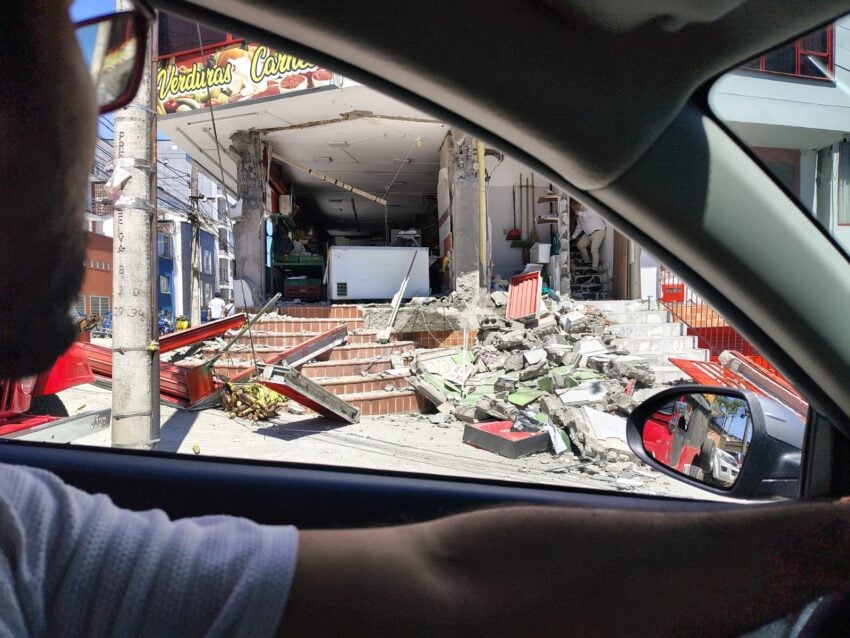
A powerful 7.4 magnitude earthquake struck western Colombia Aug. 10, 2026, killing at least 312 people and injuring thousands of others. Hundreds are missing. The earthquake caused widespread damage across 13 departments (Colombia’s equivalent to states) and 357 municipalities, with the most severe impacts reported in Risaralda, Valle del Cauca, Chocó, and Caldas.
The earthquake was felt in Bogotá, Cali, Pereira, Manizales, and other cities, as well as in neighboring Ecuador, Panama, and Venezuela. Nearly 30 aftershocks have been reported, while emergency teams continue search-and-rescue efforts.
As those operations and damage assessments continue, impact information may change as authorities reach more affected communities.
Colombia earthquake: Facts, FAQs, and how to help
- Fast facts: 2026 Colombia earthquake
- When did the Colombia earthquake happen?
- Where was the Colombia earthquake?
- How much damage did the Colombia earthquake cause?
- Was the Colombia earthquake felt in Venezuela?
- Is World Vision responding to the earthquake in Colombia?
- How can I help people impacted by the earthquake in Colombia?
Fast facts: 2026 Colombia earthquake
- A 7.4 magnitude earthquake struck Colombia at 7:34 a.m. local time, Aug. 10, 2026, impacting Bogotá, Cali, Pereira, and Manizales.
- Authorities in Colombia have reported that the death toll continues to rise, with at least 265 confirmed fatalities.
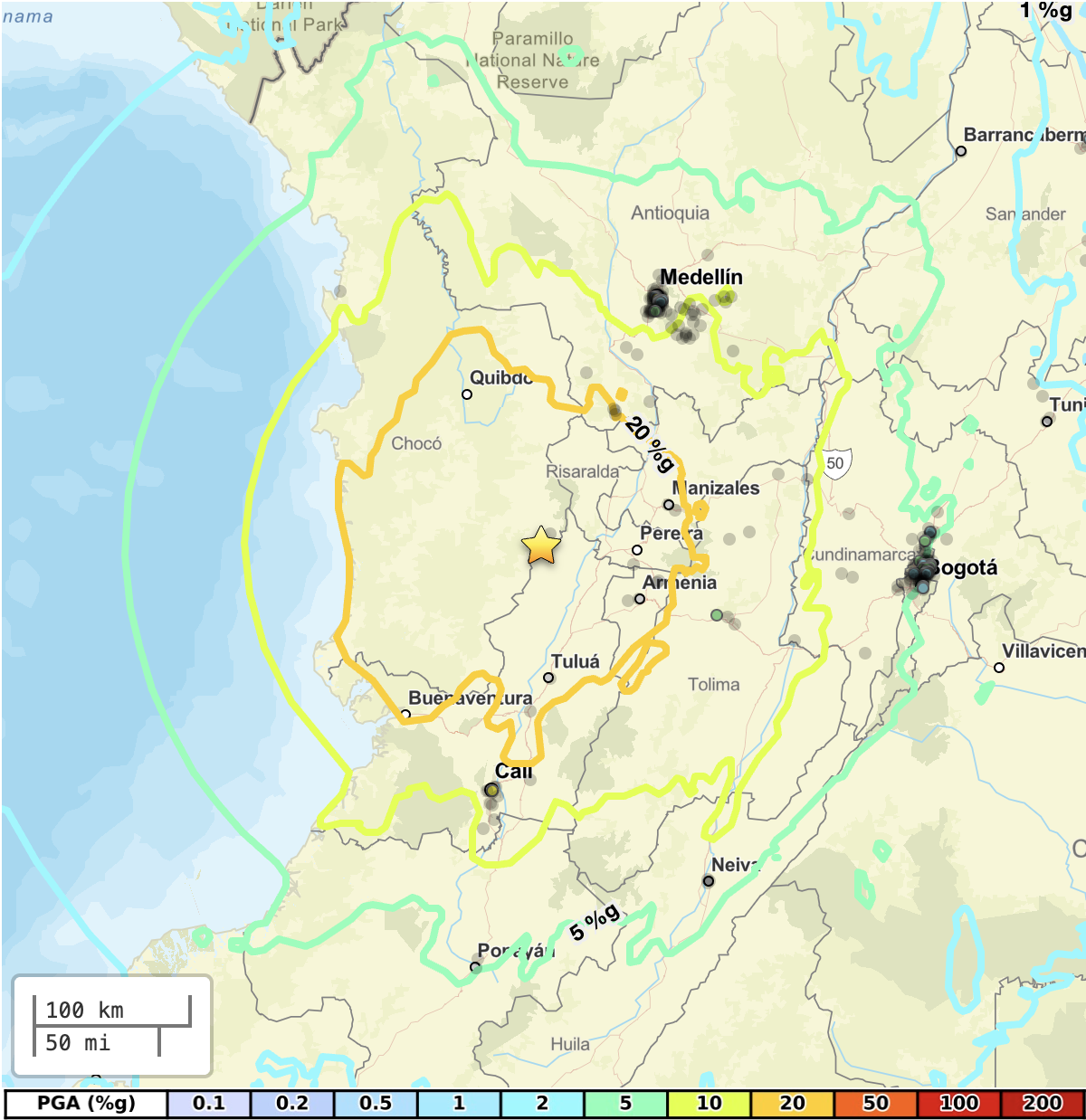
- The U.S. Geological Survey (USGS) reported that the earthquake’s epicenter was located in San José del Palmar, a community of about 4,800 residents in the Chocó region, west of the capital city of Bogotá.
- The tremors were felt beyond Colombia, with reports of seismic activity in neighboring Ecuador, Panama, and Venezuela.
- Nearly 30 aftershocks followed the main earthquake, including two measuring 2.8 and 4.8 magnitude.
When did the Colombia earthquake happen?
The 7.4 magnitude earthquake struck at 7:34 a.m. local time on Monday, Aug. 10, 2026. The earthquake was followed by numerous aftershocks, including tremors measuring 2.8 and 4.8 in magnitude.
“The event shook us early in the morning,” said Raúl Rodríguez, corporate security manager for World Vision in Colombia. “Some people were on their way to work, while others were caught at home.”
Where was the Colombia earthquake?
The epicenter was near San José del Palmar in Colombia’s Chocó department on the country’s Pacific side, about 248 miles west of the capital city of Bogotá. The earthquake occurred at a depth of about 66 miles, according to the USGS.
The earthquake’s effects were felt far beyond the epicenter. Strong shaking was reported in cities including Cali, Pereira, Manizales, and Bogotá, while tremors were also felt in Ecuador, Panama, and Venezuela.
How much damage did the Colombia earthquake cause?
The earthquake caused widespread damage in several Colombian communities. Buildings collapsed in affected areas, people were trapped in some structures, and injuries and deaths were reported. Pereira has experienced particularly severe impacts, while damage has also been reported in Cali, Manizales, and Chocó.
According to U.N. figures for August 20, the earthquake destroyed 31,461 homes in the affected region. An assessment by the United Nations Office for the Coordination of Humanitarian Affairs (OCHA) also found 3,483 educational facilities, 4,996 community centers, 348 health facilities, and 112 water supply systems were affected by the disaster. Essential services, including electricity, water, healthcare, and communications, have been disrupted or are operating intermittently.
Was the Colombia earthquake felt in Venezuela?
Yes. The earthquake was felt in neighboring Venezuela, which is still recovering from two devastating earthquakes that struck north-central Venezuela June 24, 2026.
Is World Vision responding to the earthquake in Colombia?
Yes. World Vision is preparing to help children and families most affected by the earthquake in areas where we have a presence. Our teams are continuing to assess needs and coordinate information from affected regions. As more information becomes available, World Vision will determine how best to support children and families impacted by the earthquake. In Chocó, World Vision works with the Unidos por la Respuesta Humanitaria en Colombia (UNIR) humanitarian consortium to help families access food, clean water, sanitation, and hygiene (WASH), as well as protection and support for children, adolescents, and their families.
In the coming days, World Vision plans to provide help based on what communities need most. The response will focus especially on keeping children safe and helping families meet their basic needs. The response may include:
- Protecting children: Helping identify children and families that may need extra support, connecting them with appropriate services, and helping communities keep children safe
- Safe spaces for children. Creating Child-Friendly Spaces, where children and adolescents can play, learn, and gain support in a safe environment
- Shelter and essential household items: Providing families with tarps and tools, blankets, sleeping mats, mosquito nets, bedding, cooking utensils, lamps, flashlights, and whistles
- Making shelters safer: Aiding families to make improvements to their shelters, including water storage tanks and stoves, in coordination with faith-based organizations
- Safe water, sanitation, and hygiene: Providing water filters, hygiene kits, treated or chlorinated water, chlorine and water purification tablets, along with instructions on treating and storing water safely
- Community water solutions: Supplying water filters and storage tanks for shelters and communities, and guidance on how to use and care for them
“We know that in areas such as Chocó, access challenges and disruptions to essential services represent an additional challenge. That is why we are working closely with communities and our partners to reach those who need support the most and ensure that children remain protected and supported,” said Peter Gape, World Vision’s national director in Colombia and Venezuela.
World Vision is also continuing its response to the devastating earthquakes that struck Venezuela in June. We have been delivering emergency assistance, child protection support, and other critical services to affected communities there as they recover. To date, we have supported 101, 292 people with essential services.