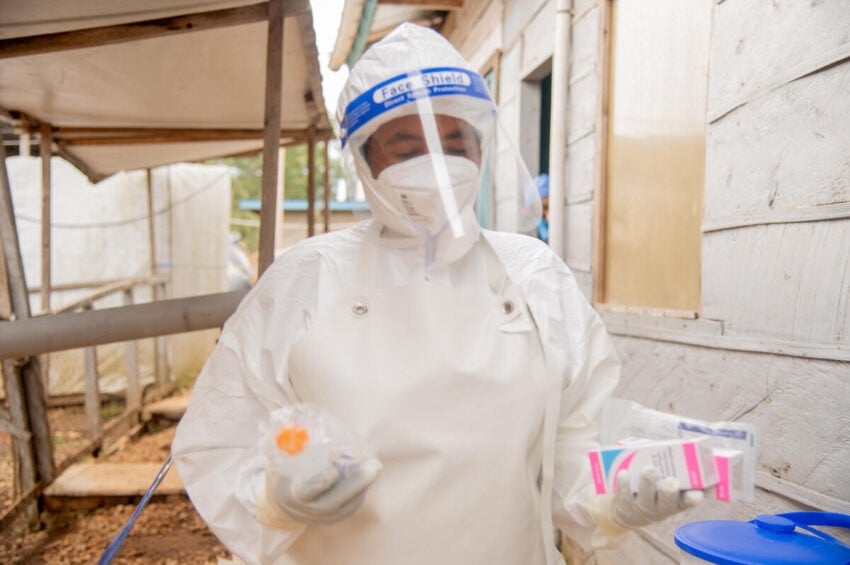
Ebola remains a serious global health threat, with an outbreak of Bundibugyo virus disease, a strain of Ebola, continuing in Democratic Republic of the Congo (DRC) and a case now confirmed in Kenya.
In May 2026, DRC declared an Ebola outbreak in Ituri province involving a newly identified variant that had not matched previously known strains. With no vaccine currently available for this variant, thousands of displaced children are at risk.
The World Health Organization (WHO) continues to classify the 2026 Ebola outbreak as a public health emergency of international concern.
On Oct. 6, 2026, Kenya confirmed its first imported case of Bundibugyo virus disease. The patient, who had traveled from DRC through Uganda to Nairobi, Kenya, died after being hospitalized and isolated. Kenya’s Ministry of Health is tracing and monitoring people who may have been exposed and has emphasized that Kenya does not currently have an Ebola outbreak.
The developments in DRC and Kenya highlight the importance of early detection, contact tracing, infection prevention and accurate information in limiting the spread of Ebola. The outbreak is unfolding in communities already facing insecurity, displacement, food insecurity and limited access to health care, conditions that can make it harder to identify cases quickly and provide timely care.
For children and families living in affected communities, Ebola can bring additional fear, disruption, and loss. World Vision is working with health authorities and communities to promote prevention, strengthen preparedness, support vulnerable children and families, and help counter misinformation.
Ebola virus disease: Facts, FAQs, and how to help
- Fast facts: Ebola
- What is Ebola?
- What is happening with the Ebola outbreak in DRC?
- Has Ebola been reported in Kenya?
- What are the symptoms of Ebola?
- Is Ebola treatable?
- How does World Vision respond to Ebola outbreaks?
- What was World Vision’s response to the Ebola outbreaks in 2014?
- How can I help Ebola survivors and people affected by viruses?
Fast facts: Ebola virus disease
- Ebolavirus is highly contagious and can cause Ebola virus disease (EVD), formerly known as Ebola hemorrhagic fever.
- The disease is initially transmitted to humans from wild animals. Subsequently, it spreads by human-to-human transmission through direct contact with the blood, secretions, organs, or other bodily fluids of infected people. It can also be transmitted through contact with surfaces contaminated with these fluids.
- In 1976, public health officials identified ebolaviruses during two successive outbreaks of lethal hemorrhagic fever in distinct regions of Central Africa. The initial outbreak occurred in a village near the Ebola River in the Democratic Republic of the Congo (DRC), giving the virus its name. The second outbreak occurred an estimated 500 miles away in what is now South Sudan.
- Ebola outbreaks primarily occur in Central and West Africa, with occasional cases in other regions.
- Recent outbreaks have been confirmed in DRC (2018–2020), Uganda (2022–2023), and DRC’s Kasai and Ituri provinces (2026).
- In October 2026, Kenya confirmed its first imported case of an Ebola strain, Bundibugyo virus disease, linked to the ongoing outbreak in DRC.
- CDC officials say the likelihood of Ebola spreading to the United States is very low.
You can deliver hope and help
amid emergencies.
What is Ebola?
Ebola virus disease, formerly known as Ebola hemorrhagic fever, is a rare and often deadly disease in humans caused by infection with one of four ebolavirus strains: Zaire, Sudan, Bundibugyo, or Taï Forest.
What is happening with the Ebola outbreak in DRC?
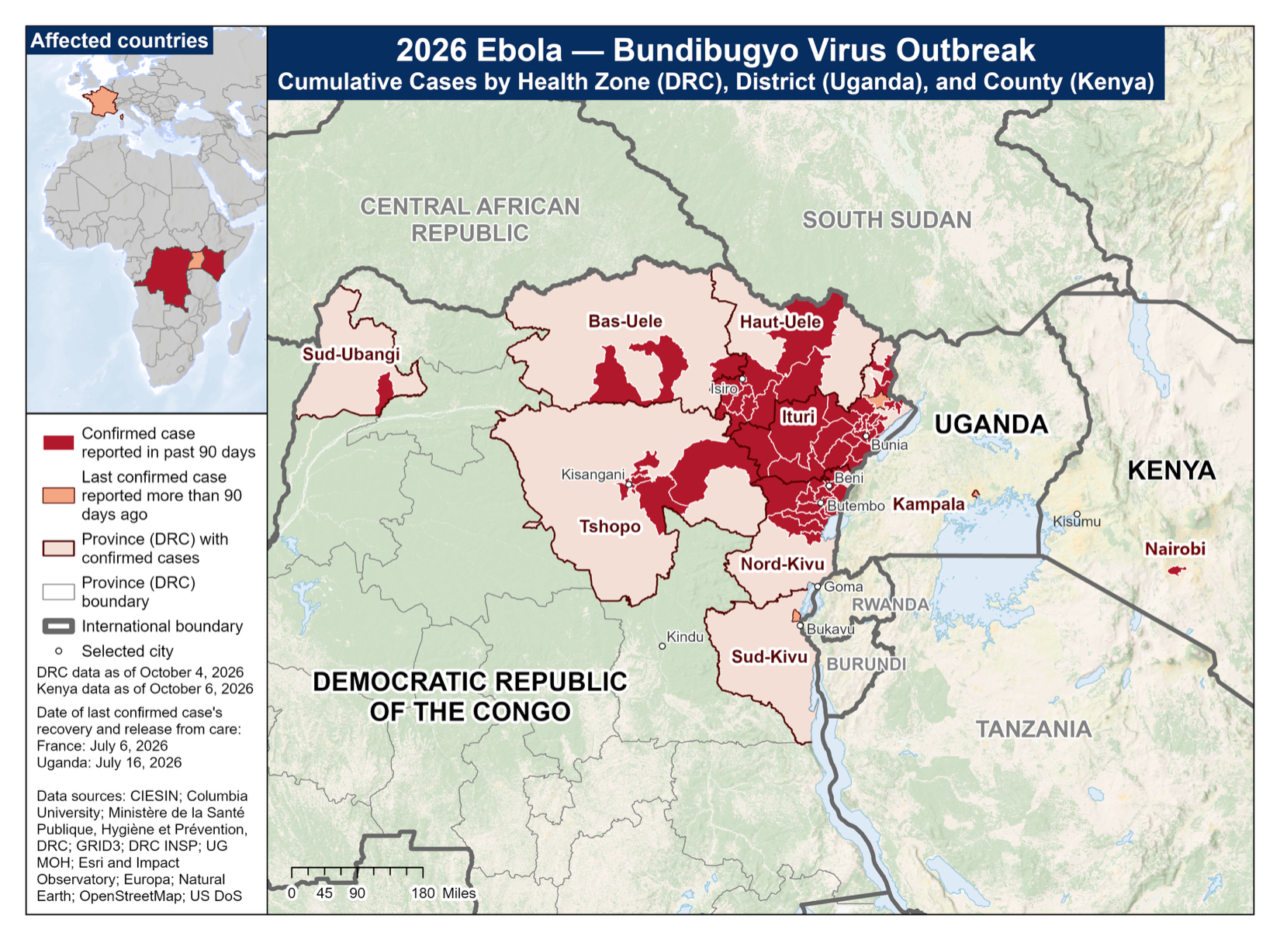
On May 15, 2026, DRC officials declared a new Ebola outbreak in the health zones of Bunia, Mongwalu, and Rwampara in Ituri Province. Since then, the virus has spread rapidly, becoming the world’s second-largest Ebola epidemic on record, according to government data, as transmission continues to outpace efforts to contain it.
The outbreak is especially concerning because it is occurring amid insecurity, population displacement, high population movement, and limited access to health services in some affected communities. These conditions can make it harder for health workers and humanitarian organizations to identify cases quickly, trace contacts, and provide timely care.
As of Oct. 4, 2026:
- 8,625 confirmed cases have been reported, according to the Centers for Disease Control and Prevention.
- 4,151 confirmed deaths have been recorded.
- The outbreak was affecting 62 health zones across seven provinces.
- Ituri remained the main center of transmission, although cases have continued to increase in other provinces.
The situation remains fluid, and case numbers can change as authorities identify, test, and report additional cases.
The WHO continues to classify the outbreak as a public health emergency of international concern.
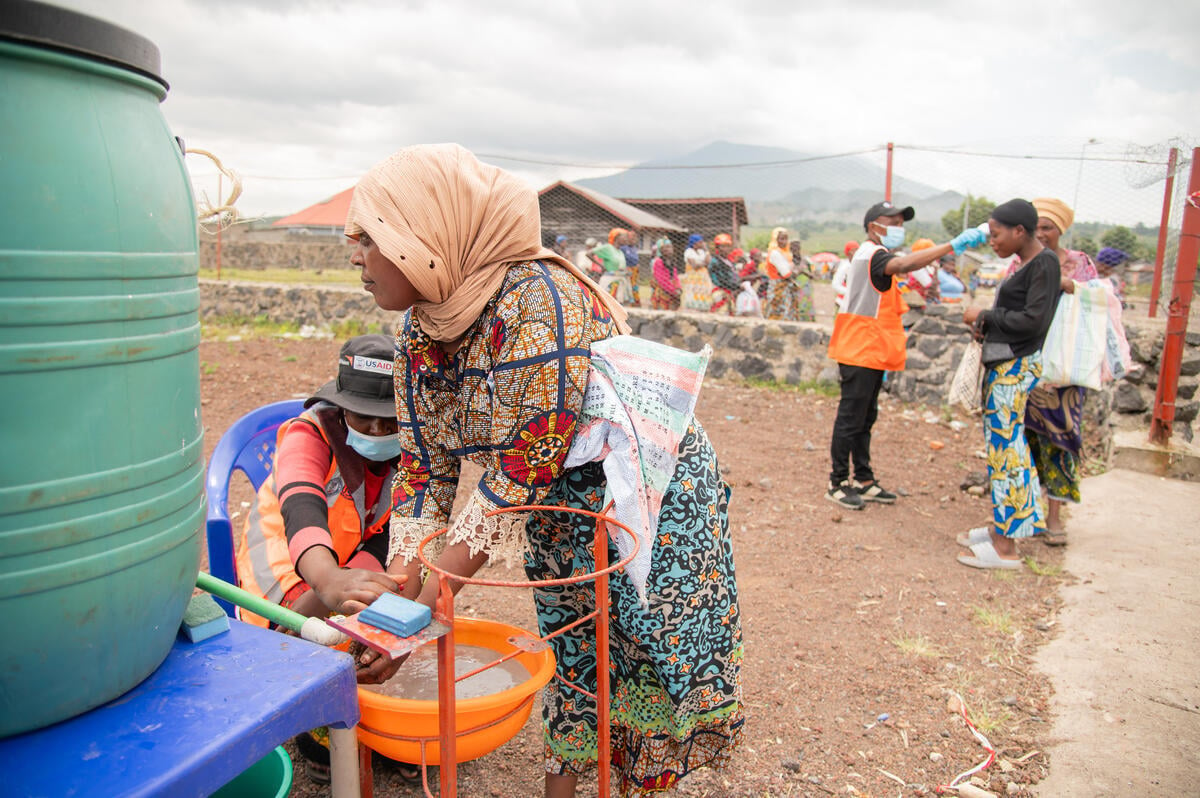
World Vision is also working alongside health authorities and humanitarian partners to help contain the 17th outbreak and protect vulnerable children and families through hygiene promotion, infection prevention and control, child protection support, community education, and coordination with local leaders.
Has Ebola been reported in Kenya?
Yes. On October 6, 2026, Kenya’s Ministry of Health confirmed the country’s first imported case of Bundibugyo virus disease, a strain of Ebola.
The patient, a Kenyan citizen who had traveled from DRC through Uganda, arrived in Nairobi on Oct. 3. After developing symptoms, the patient was isolated and received medical care but died Oct. 5. A safe and dignified burial was conducted in accordance with Ebola prevention protocols.
Kenya’s Ministry of Health has emphasized that this is an imported case and that Kenya does not currently have an Ebola outbreak. Health authorities are tracing and monitoring people who may have been exposed to prevent further transmission.
What are the symptoms of Ebola?
Symptoms of Ebola virus disease include high body temperature, headache, abdominal pain, diarrhea, vomiting, and both internal and external bleeding, such as from the gums and stool.
It can be challenging to distinguish Ebola from other diseases, such as malaria, typhoid fever, and meningitis. Symptoms typically appear from 2 to 21 days after contracting the disease. People who have contracted the disease can’t transmit it to others until symptoms appear.
Is Ebola treatable?
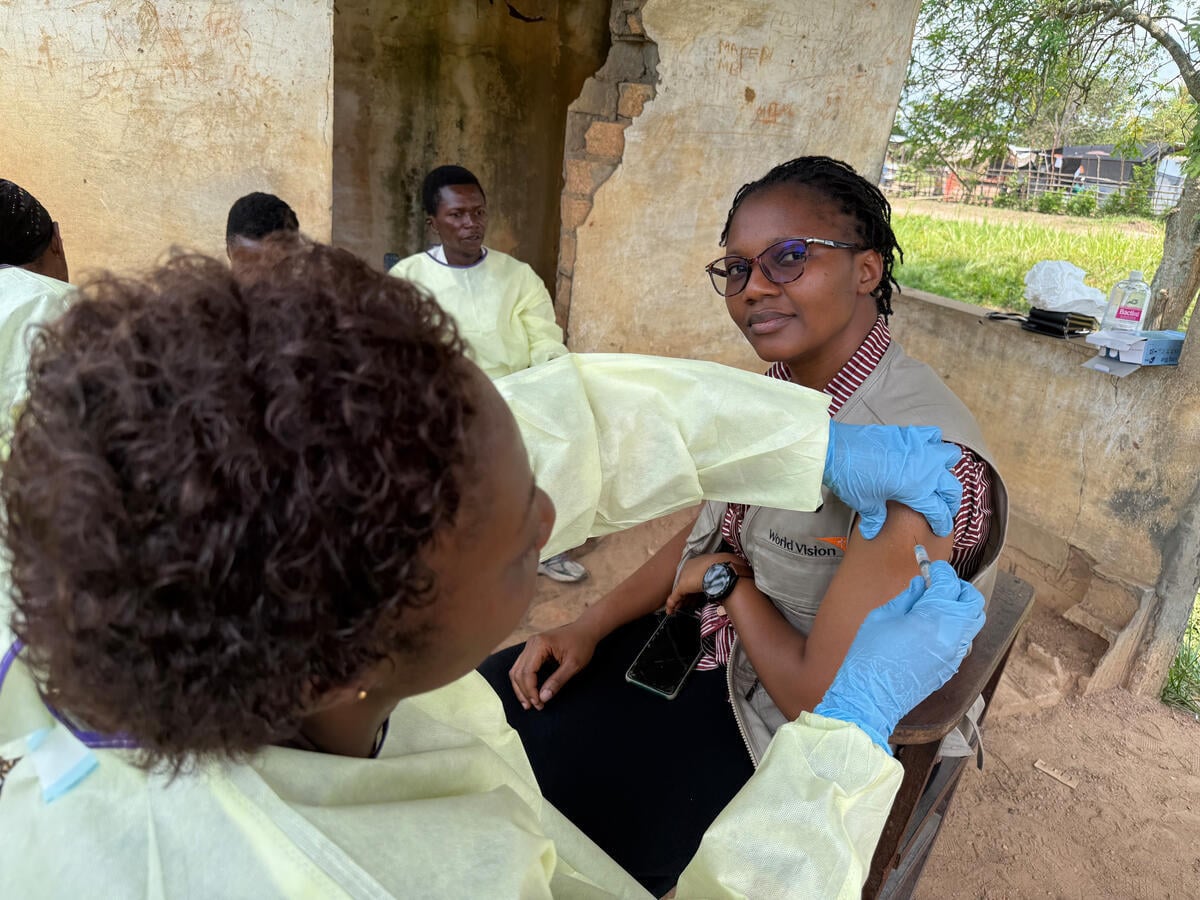
While there is no proven, licensed treatment for Ebola, early symptom management and intravenous fluid hydration can improve survival rates. Ongoing research efforts are exploring potential treatments, including antiviral drugs and immunotherapies.
The 2026 Ituri outbreak is especially concerning because the newly identified variant currently has no vaccine available.
How does World Vision respond to Ebola outbreaks?
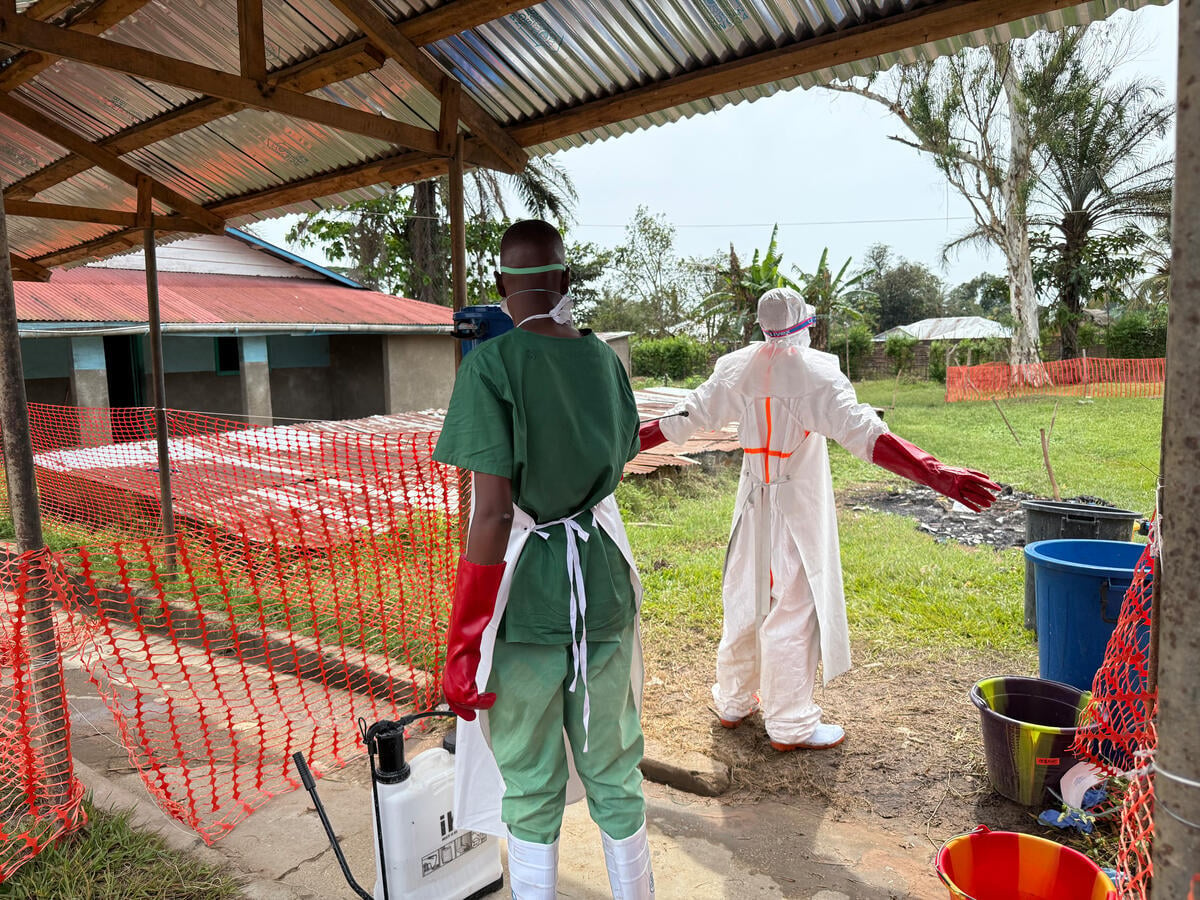
World Vision responds swiftly to Ebola outbreaks by educating affected communities, supporting healthcare workers, providing child protection and psychosocial support, ensuring access to clean water and sanitation, and delivering emergency relief. We aim to help communities stay safe and resilient in the face of this deadly virus. A few of our key programming areas include:
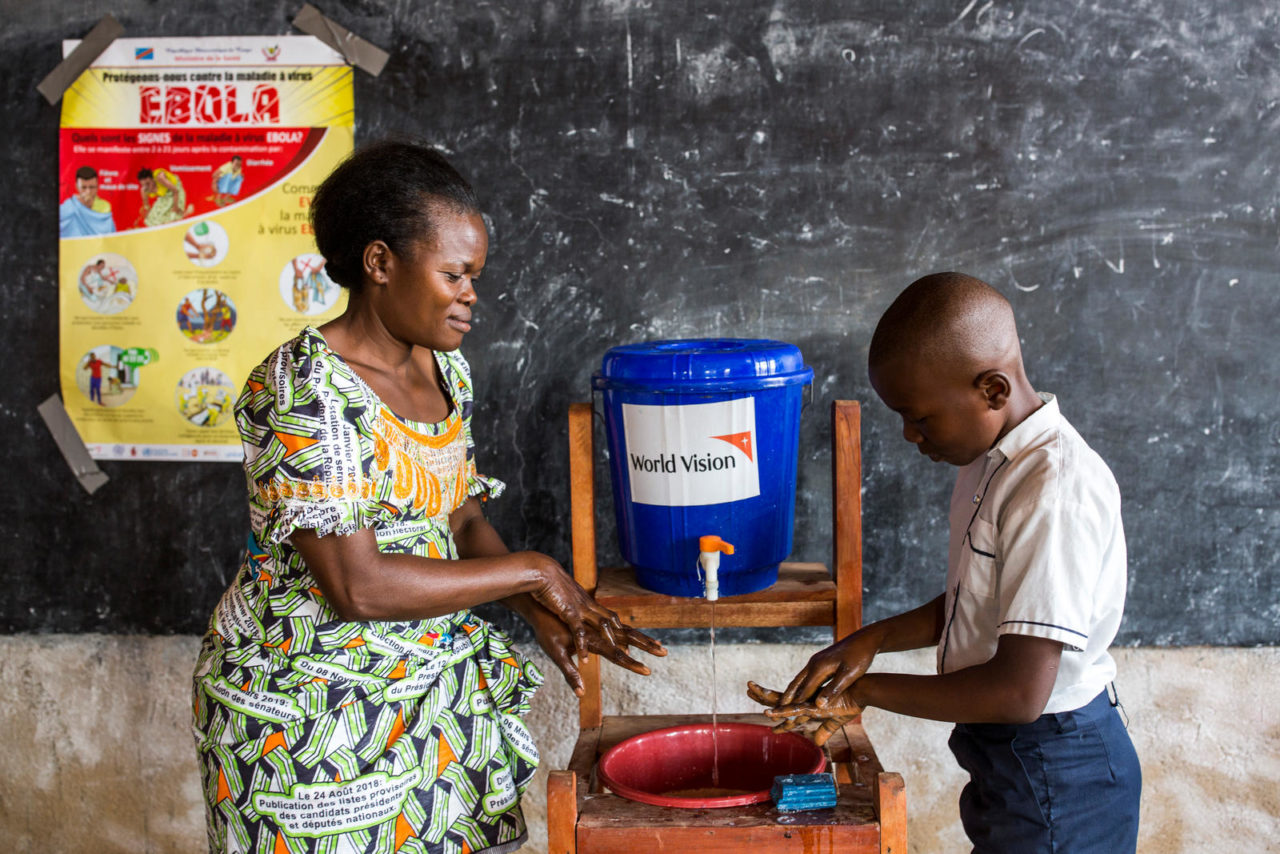
Community education: We equip communities with information about Ebola prevention, transmission, and the importance of early detection. We help raise awareness to ensure people know how to protect themselves from the virus.
World Vision’s Channels of Hope programming: We train and equip religious leaders to share accurate information about Ebola prevention and treatment, dispel myths and misconceptions, and promote safe practices within their congregations and communities. By working with these local faith leaders, who have a great deal of influence because of how much their communities trust them, World Vision seeks to enhance awareness, reduce stigmatization, and encourage early detection and treatment of Ebola cases. The collaborative approach between faith-based organizations, communities, and health agencies has played a vital role in controlling the spread of Ebola and providing support to affected individuals and families.
Child protection: We offer psychosocial support to children who may have lost family members or been affected by the outbreak. We work to keep children safe and emotionally supported.
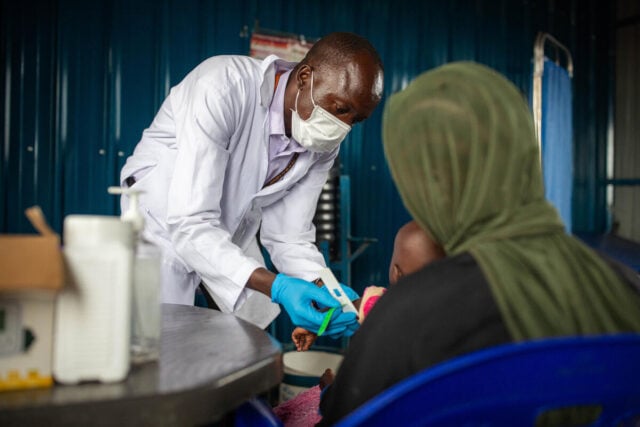
Healthcare support: We supply healthcare workers with medical supplies, protective gear, and training so they can safely care for Ebola patients.
What was World Vision’s response to the Ebola outbreaks in 2014?
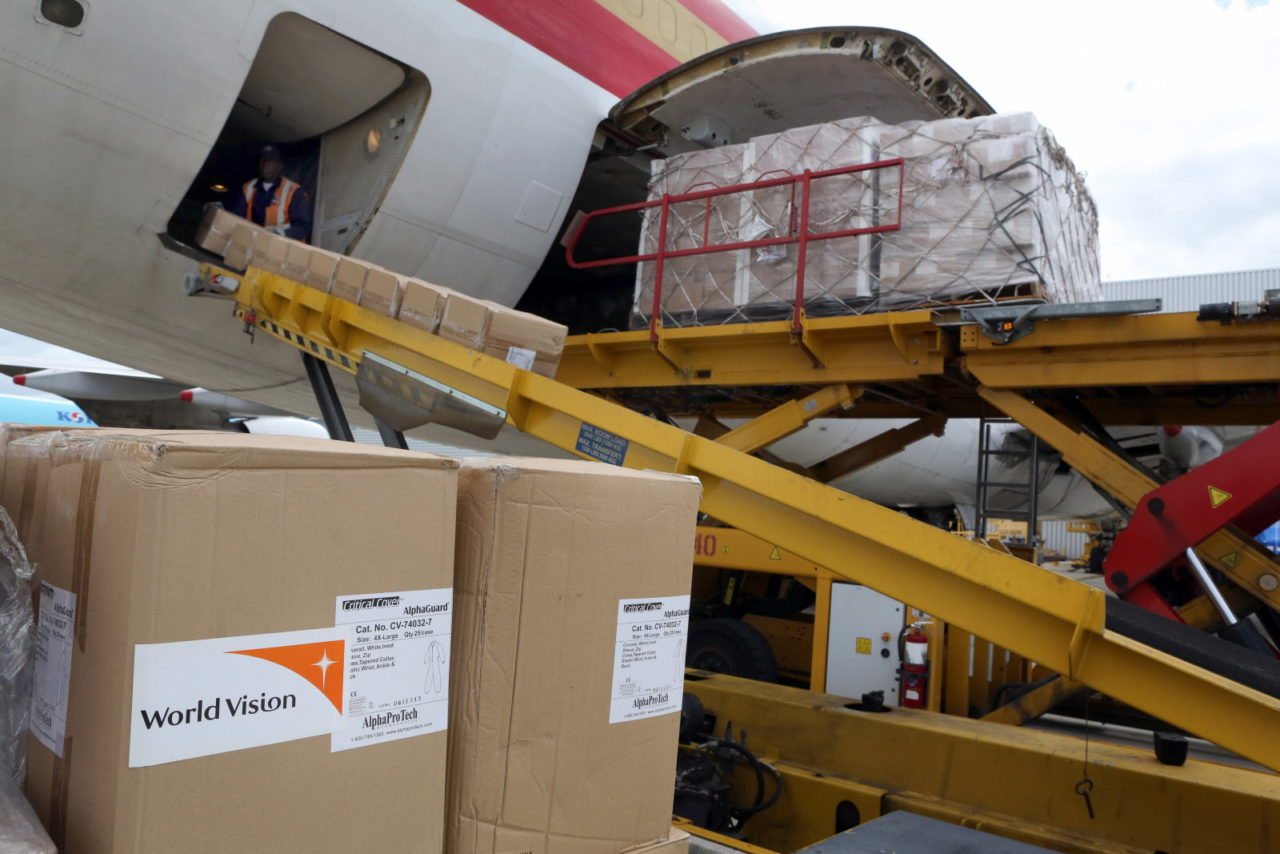
World Vision swiftly responded to the 2014 Ebola virus outbreak in Sierra Leone. We did this through a comprehensive effort to protect children and their families. With a strong focus on health and safety, awareness and prevention, safe burials, and social and economic recovery, World Vision played a crucial role in combating the epidemic. Our initiatives ranged from providing personal protective equipment and hygiene kits to launching extensive education campaigns and training local leaders on virus prevention. Through our efforts, we successfully prevented Ebola-related deaths among the children and families we supported. And we contributed significantly to the containment of the outbreak. Our approach encompassed immediate medical needs, long-term recovery, and community resilience.
When Ebola struck Sierra Leone in 2014, World Vision was already working in 25 program areas. We were serving an estimated 58,000 children and their families. Building on 20 years of community development in Sierra Leone, we joined communities, partner agencies, and every level of government in the battle against Ebola.
During the emergency response, World Vision reached 1.6 million people through these and other initiatives:
Health and safety
- World Vision delivered 5.4 million personal protective equipment items. These included suits, gloves, face masks, and goggles to Sierra Leone hospitals and health centers, and gave hygiene kits to schools. Long-time World Vision partner McKesson, one of the largest healthcare service companies in the U.S., donated 200 pallets of medical relief supplies to help meet Sierra Leone’s needs for five months.
Awareness and prevention
- World Vision–trained staff organized massive awareness, prevention, and education campaigns to protect children from the disease through radio and house-to-house information sharing.
- Staff trained more than 2,000 influential local leaders — including Christian and Muslim clerics, traditional faith healers, and frontline community health workers — to deliver messages on Ebola awareness and prevention. “When so many communities face such terrible suffering, the church must be there to combat fear, stigma, isolation, and hopelessness with both love and tangible support,” said Bruno Col, then–World Vision communications director in West Africa.
Safe and dignified burials
- World Vision and two other aid agencies organized and trained 800 burial teams. These teams carried out 29,201 burials to prevent the spread of the disease while ensuring families had the opportunity to mourn and respecting their cultural beliefs.
- World Vision and its humanitarian partners, along with burial workers like 53-year-old Ebola survivor Maseray Kamara, were awarded the 2015 Bond International Humanitarian Award. The award recognized the courage and care of those on the front lines of Ebola prevention during the outbreak. “This recognition is a tremendous encouragement after all the suffering we have seen in Sierra Leone and across West Africa,” said Grace Kargbo, a World Vision Sierra Leone burial team manager at the time. “These brave souls have received little recognition at home and abroad. In fact, they have often been shunned, ostracized, vilified because they are burial workers.”
How is World Vision responding to the current Ebola outbreak?
World Vision is supporting Ebola prevention and response efforts in DRC and strengthening preparedness in Kenya, with a focus on protecting children, strengthening communities and sharing trusted health information.
In Kenya, World Vision is strengthening its preparedness and participating in government-led Ebola coordination following the country’s first imported case of Bundibugyo Ebola virus disease.
World Vision’s staff in Kenya are reinforcing infection-prevention measures, coordinating with health authorities and county governments, monitoring the situation, and helping align public messaging with Ministry of Health guidance. Our Channels of Hope approach and faith-leader networks can help communities access accurate information and reduce fear and stigma.
“Ebola is a frightening disease, and it is children who carry the heaviest burden: losing parents and caregivers, missing school and facing stigma in their communities,” said Gershon Mwakazi, interim national director for World Vision in Kenya.
“We commend the Ministry of Health for its swift confirmation and transparent communication. World Vision in Kenya stands ready to work alongside the government, county governments, faith leaders, and communities to stop this virus from spreading and to keep children safe. Fear and misinformation spread faster than the virus itself, and countering them is where our community networks can make the greatest difference.”

How can I help Ebola survivors and people affected by viruses?
- Pray: Join us in praying for people affected by Ebola and other disease outbreaks.
Pray for families who have lost loved ones, people who are sick or under quarantine, and the health workers caring for them. Pray also for the organizations working to contain the virus, and for the children and families across the region.
Give: Your support can help provide clean water and other essential resources, strengthen community resilience, and equip families to prepare for and respond to emergencies, including disease outbreaks.
Jonathan Bundu, Karen Homer, Chris Huber, Heather Klinger, Denise C. Koenig, Sahr Ngaujah, and Sevil Omer, all of World Vision, contributed to this article.